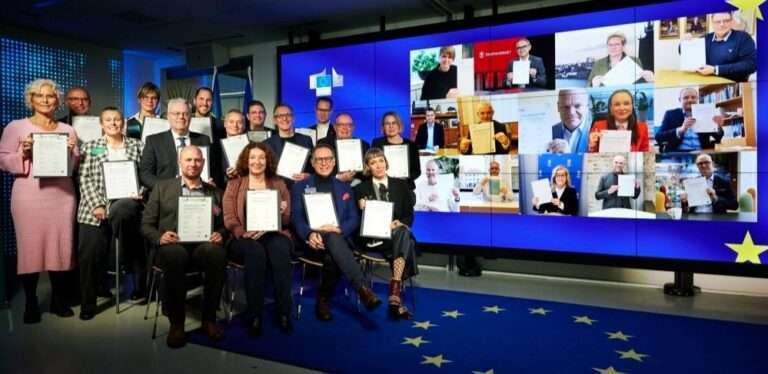
The signing of Climate City Contract 2030

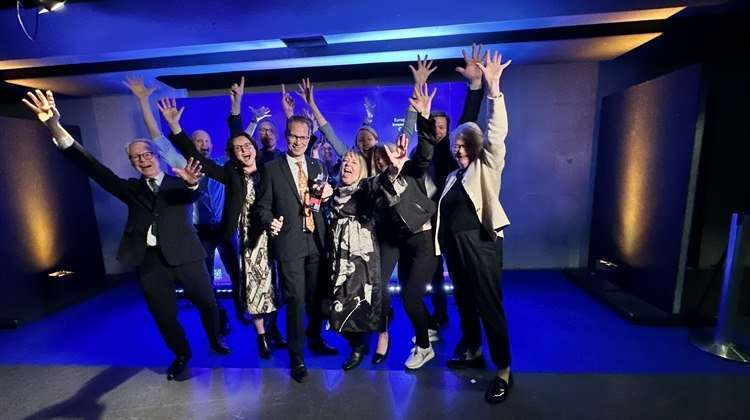
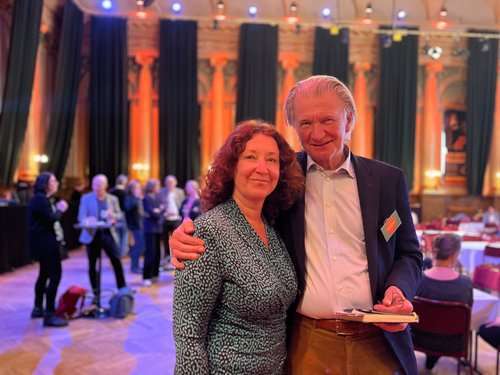
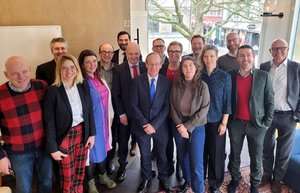
Our 23 cities and Directors-General in 6 government agencies have signed Climate City Contract 2030. Read more in the press release.

Our 23 cities and Directors-General in 6 government agencies have signed Climate City Contract 2030. Read more in the press release.

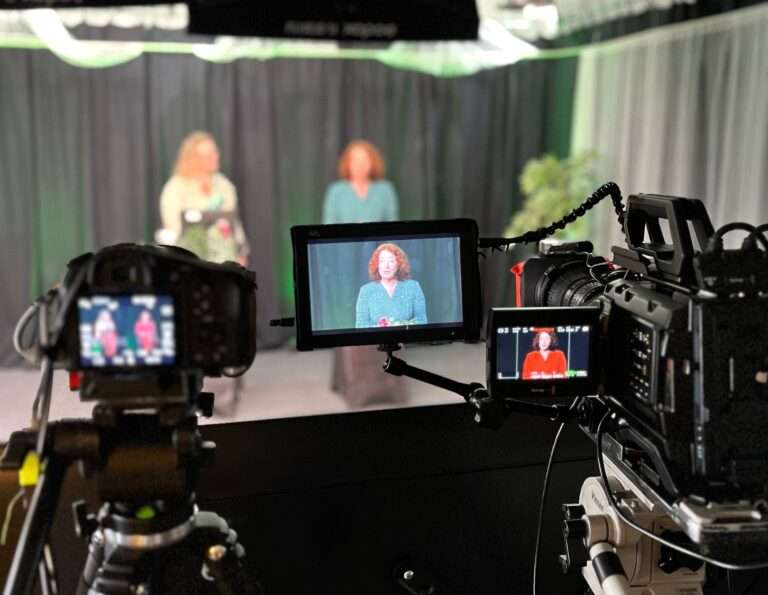
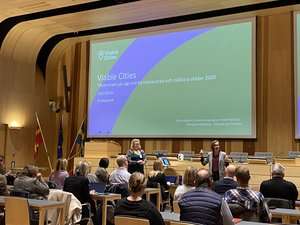
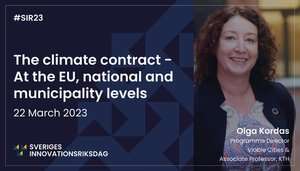
Olga Kordas talks about the climate crisis and the signing of the Swedish Climate City Contract that takes place on European Viable Cities Day.

Mikael Sanfridson, Mayor of Linköping, talks about Linköping's climate work during the year and how the municipality will increase its ambitions and the pace of climate change in the future. The film is recorded before European Viable Cities Day 2022 where 23 Swedish cities in the Viable Cities initiative Climate Neutral Cities 2030, of which Linköping is one of them, sign the 2022 Climate City Contract 2030.

Lena Lagestam, Chairman of the Board of Borlänge Energi, talks about Borlänge's climate work during the year and how the municipality will increase its ambitions and the pace of climate change in the future. The film is recorded before European Viable Cities Day 2022 where 23 Swedish cities in the Viable Cities initiative Climate Neutral Cities 2030, of which Borlänge is one of them, sign the 2022 Climate City Contract 2030.

Anders Almgen, Chairman in the municipal board in Lund, talks about Lund's climate work during the year and how the municipality will increase its ambitions and the pace of climate change in the future. The film is made ahead of European Viable Cities Day 2022, where 23 Swedish cities in the Viable Cities initiative Climate Neutral Cities 2030, of which Lund is one, sign the 2022 Climate City Contract 2030.

In Borlänge, Skellefteå and Karlstad, new mobility solutions are being developed to improve accessibility between town and country throughout Sweden. The new projects promote behavioral changes that can contribute to climate-smart and sustainable transport and mobility patterns for people and goods between city and country, in urban and rural areas.

All Climate Neutral Cities 2030 actions involve businesses together with academia, public organisations and civil society. The municipal sphere has only partial control over the measures that need to be implemented, so business efforts and investments are crucial.
Smart City Expo World Congress (Barcelona, November 15-17) is the leading international event for the smart city sector, a key meeting point for experts and leaders of the world's most innovative cities, companies, research centers and international organizations. Over 24,000 professionals are expected from more than 700 cities and over 400 international speakers that will share their vision on how to build a more sustainable and livable urban future.

How can students accelerate the transition to Climate Neutral Cities 2030? What measures are needed to support municipal work?

Sustainable, innovative solutions for buildings, outdoor environment and mobility that have been implemented in various pilot projects, projects and initiatives need to be captured and become standard solutions for both new construction and upgrading of urban areas. Then large-scale sustainable urban development can be achieved.

In all 23 cities that are part of Viable Cities' Climate Neutral Cities 2030 program, intensive work is underway with citizen engagement where they experiment with different forms. For more than a year now, Gothenburg has hosted Götepod, where city architect Björn Siesjö talks to guests about Gothenburg's urban development from different perspectives. In episode 18, he was visited by Karin Bjerner, Development Manager at the Environmental Administration, City of Gothenburg and Viable Cities Learning Strategist Lena Holmberg.
Carl Mossfeldt, who heads Gothenburg's climate transition function, used Karin Boye's poem Ja visst gör det ont in his opening speech at Lindholmen Open Day to illustrate the situation in which Gothenburg and many other cities find themselves in terms of daring to let go of the old. In his speech, he also emphasized the importance of seeing the climate transition in a geopolitical perspective ...

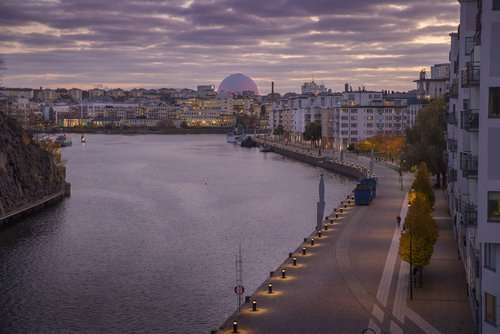
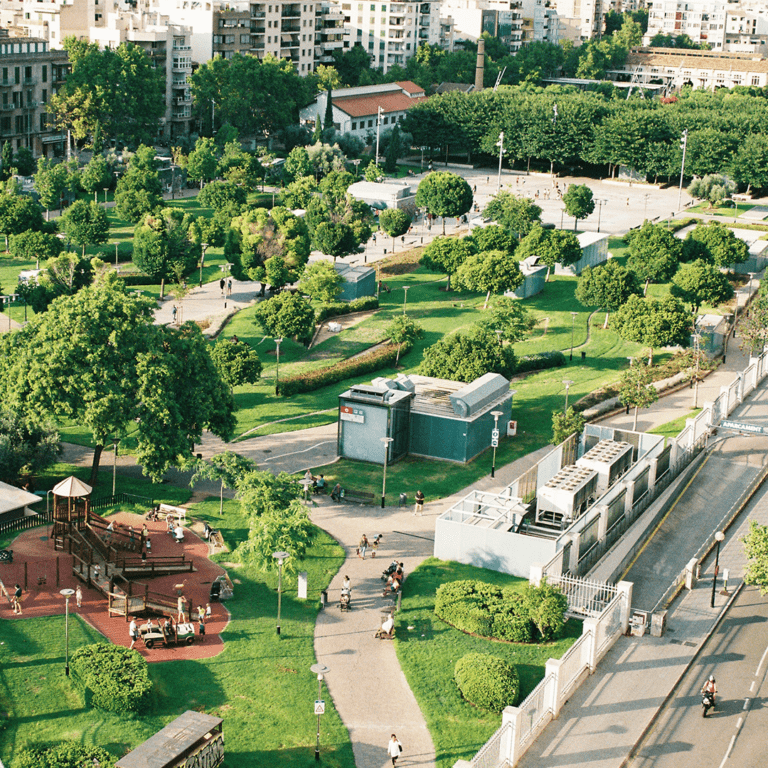
The transition to become climate neutral 2030 requires that cities work in new ways. In this climate breakfast we explore how the cities of Valencia and Stockholm have handled this challenge in terms of leadership, organization and capacity building. We also learn more about new tools such as portfolio management and the role of intermediary organizations such as citiES 2030 in Spain and Viable Cities in Sweden, for supporting this development.
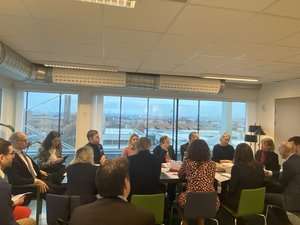
Over 60 participants from all 23 cities in the Climate Neutral Cities 2030 program came together for a climate literacy workshop for municipal officials and politicians. We have now gathered all the external resources from our partnerships that are available for free on this issue.
During the year, Viable Cities is exploring this together with the county administrative boards and regions in Västerbotten and Norrbotten. On behalf of the government, work is now under way to develop Sweden's and indeed Europe's first Climate City Contract at regional level.

The development of so-called system demonstrators is a way to enable system innovation with great power and mobilization to meet complex societal challenges. With system demonstrators, Vinnova and Viable Cities want to test and demonstrate the transformation of a system in a real environment, where space is created for experiments and where areas with great potential can be scaled up. Six projects have been granted funding for a design phase.
Smart City Expo World Congress (Barcelona, November 15-17) is the leading international event for the smart city sector, a key meeting point for experts and leaders of the world's most innovative cities, companies, research centers and international organizations. Over 24,000 professionals are expected from more than 700 cities and over 400 international speakers that will share their vision on how to build a more sustainable and livable urban future.
During this year's edition of Way Out West, the climate meeting Greentopia was held for the first time, which aims to make the event industry climate neutral by 2030. Dagens Industri drew attention to this, which you can read more about here.

In response to the climate crisis, the world's cities must make a huge transition. The whole notion of urban life and how we travel, eat, shop, work, build and heat homes must change to address climate change. This requires a systemic shift that involves new innovative approaches and solutions that include multiple dimensions such as policy and regulation, business models, behavior and infrastructure. Thus, a new form of intervention, called system demonstrator, has been developed by Vinnova and Viable Cities as a way to enable system innovation to meet complex societal challenges with great power and mobilization. Read more on Vinnova's website.
Last week, the UN conference Stockholm+50 was held where Sweden was one of the host countries and Viable Cities Program Manager Olga Kordas participated in one of the panel discussions held by Sweco.
H22+50 The session in the city of Helsingborg ended with a study visit. Viable Cities Lena Holmberg chose to go to Drottninghög, which aims to be a socially, ecologically and economically sustainable neighborhood.

The Vinnova and Viable Cities workshop "Essential system transformation" gathered a wide range of people at the Urban Future conference in Helsingborg on June 1. Co-facilitated by UN-Habitat and Dark Matter Labs, experiences from the work of the Climate Smart Cities Challenge were transferred to the design of system demonstrators for climate-neutral cities in Sweden.
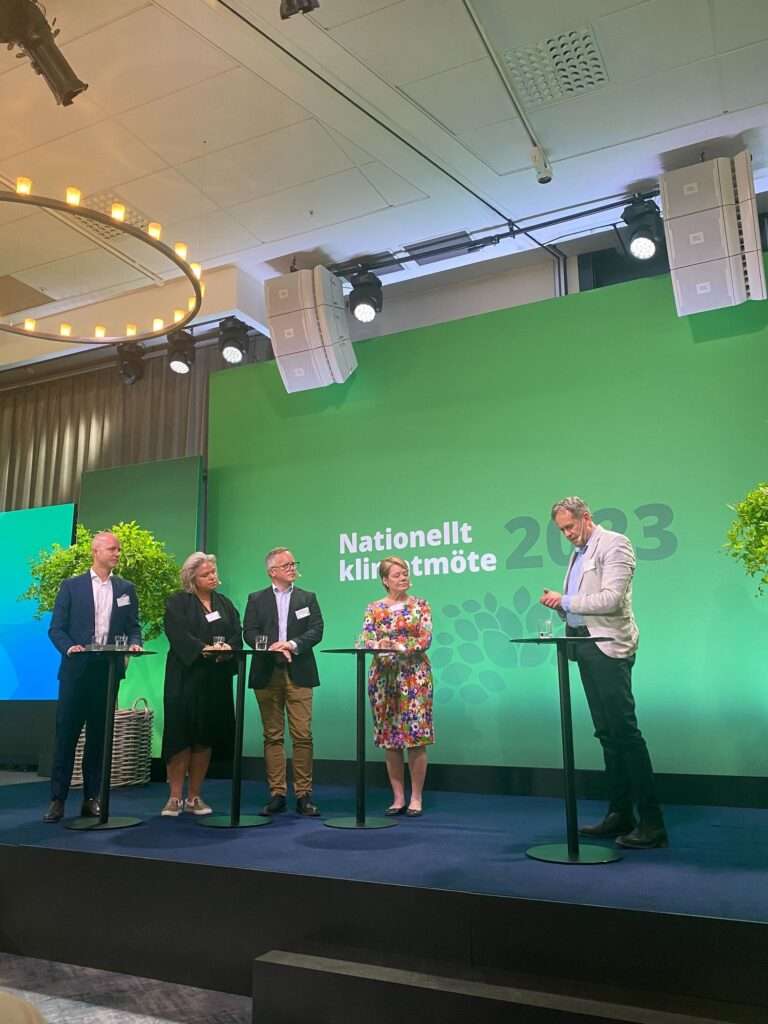
The researcher Sol Agin from Karlstad University participated today in our lunch seminar on climate communication where she presented results from her research. There is much to learn from her analysis of the consequences of different ways of communicating to different target groups where the expectation of the sender plays a major role.

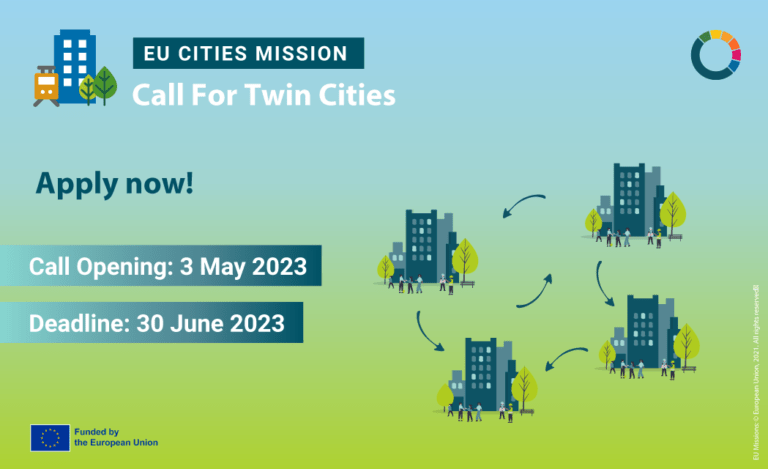
Gävle, Gothenburg, Helsingborg, Lund, Malmö, Stockholm and Umeå. It is now clear which Swedish municipalities will now be part of the EU's mission for climate-neutral cities in 2030 - Cities Mission. A total of 100 cities across Europe have been selected. But what does this mean for the cities that joined? And how can it contribute to the climate transition in all Swedish cities?
Already this year, emissions in Sweden need to be reduced by more than 20 percent to meet our share of the Paris Agreement's 1.5 degree target. This is according to a carbon budget developed by WWF together with researchers at Uppsala University. Meeting the target requires a completely different societal transition than the one currently being discussed in the Swedish debate. So how can cities accelerate their climate work and help to speed up the climate transition? Lars Johansson explains more about this in his blog.
Gävle, Gothenburg, Helsingborg, Lund, Malmö, Stockholm and Umeå. These are the Swedish municipalities that are now part of the EU's mission for climate-neutral cities in 2030 - Cities Mission. A total of 100 cities have been selected out of 377 applicants. And seven of them are Swedish cities.

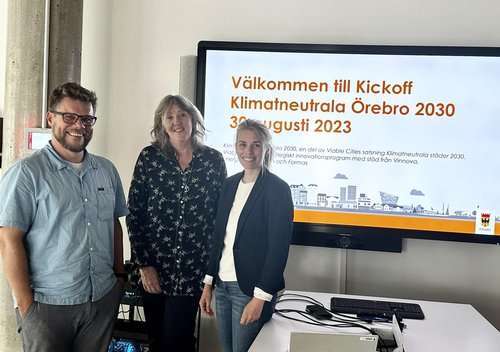
Yesterday, Viable Cities made a study visit to Uppsala municipality's city hall to participate in the kick-off of the new Climate Neutral Uppsala work package.
On April 20, it was time for Viable Cities' member organizations to gather for the Annual General Meeting and Strategy Day. The AGM itself was completed quickly and the rest of the day was devoted to insight into current activities and creative exercises.
On April 11, thirteen actors gathered in Borlänge to launch and manifest the partnership they have entered into to accelerate the transition to a climate-neutral Borlänge by 2030. On the blog, project manager Salomon Abresparr tells us about the gathering of forces around a local Climate City Contract.
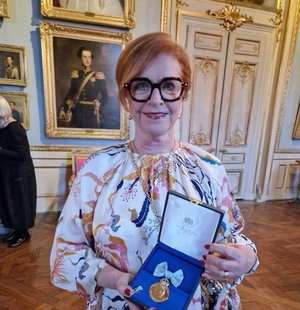
The magazine Aktuell Hållbarhet has now published the list of the country's most powerful people in sustainability. Viable Cities Program Manager Olga Kordas is ranked 34th.
- "It's fantastic to be on the list," says Olga Kordas. I am honored and see it as the entire Viable Cities team has been appointed, we do this job together.

The European DUT partnership, of which Viable Cities is a member, is now looking for participants from Swedish cities for three thematic city panels: one will be on energy positive districts (PED), another on circular economy and the third on 15-minute cities. The deadline for cities to register their interest is April 25.
Swedish researchers and organizations will receive SEK 30.9 million in funding for eight projects in sustainable urban development, through the European research program ENUTC.
The societal challenges we face relate not only to climate change but also to housing segregation, exclusion and health inequalities. With less than 10 years to go before the 2030 Agenda goals are achieved, the time to act is now. It's time to turn knowledge into action and ensure that research is put to good use in order to transition to a sustainable society that does not exceed the planetary boundaries.
Events are a growing billion-dollar industry and a key component of the economy and profile of many cities. At the same time, they are an increasingly important tool for community development. The joy and excitement of an event is something special. There is a strength and power to influence and change. This is why events have a great potential to contribute to, push and accelerate the climate transition.
Achieving the mission of climate-neutral cities by 2030 requires a transformation of the entire social system. We need to work in completely new ways and find solutions that encompass all dimensions that affect our lives: from regulatory frameworks and business models to the behavior of all citizens.
Vinnova, Viable Cities and several cities are now developing a new tool to achieve this - system demonstrators. Anna Gemzell from Umeå municipality believes the tool can make a difference.
Gävle, Borlänge and Eskilstuna are three of the "newer" municipalities in the Climate Neutral Cities 2030 initiative. This week, the project managers from the three met at the Palladium in Borlänge for joint learning.
- "There is great value in developing existing and finding new forms of cooperation between the cities when climate work is accelerated," says Evelina Loberg, project manager in Gävle municipality.
Nature is a good example of a circular system, nothing becomes trash that needs to be disposed of, everything is recreated into something new. To keep the global temperature rise below 1.5 degrees, we need to find circular systems for the resources we use. During Climate Breakfast 21, we went from broad brushstrokes in the EU to local initiatives in Karlstad. How can the circular economy contribute more to the climate transition?
During Transition Lab Forum 8, we shared experiences from Skellefteå as part of the transition in northern Sweden, and we explored some key issues in the transition process and Climate City Contract 2030 - multi-level governance, sustainable construction, business strategies for sustainability and citizen engagement. The power of the transition in the north is a golden opportunity to use to accelerate the climate transition throughout Sweden and the world.
Viable Cities is growing and now welcomes Maria Tengvard, Lars Johansson and Karin Linnea Petrusson to the program office. They bring more muscle to our joint work towards the mission of climate-neutral and sustainable cities by 2030.

Many of the emissions we need to address come from construction, including the materials used, such as concrete. But it is possible to use other materials, the forest contributes a material that is both strong and sustainable. Sustainable construction in wood is the theme of Climate Breakfast 20, where we are hosted by Tomas Nord from RISE / Smart Housing Småland and Britt-Inger Brisádottir, development strategist, Gustaf Ulander, project manager, both from Skellefteå municipality.

This breakfast is hosted by our program manager Olga Kordas, who develops the thoughts about Climate City Contract 2030's innermost essence, and by Henrik Johansson from Växjö municipality and Charlotte Brynielsson from Kalmar municipality. Both municipalities are part of the Climate Neutral Cities 2030 initiative and will talk about the value of Climate City Contract, the iterative process, what they have achieved and their plans for the future. Welcome to the Viable Cities Climate Breakfast 2022!
Climate and sustainability pioneers Umeå, Malmö and Stockholm are three of four nominees for the Swedish Architects' Award for the best plan of the year - the Plan Prize. The winner will be announced in April.
The European Commission has now published the list of all European cities that want to participate in the mission 100 climate-neutral and smart cities by 2030. From Sweden, 13 cities have applied, all of which are part of the Viable Cities initiative Climate Neutral Cities 2030.
Do you want to contribute to the development of sustainable urban mobility? Now you can apply for support for Swedish participation in the call for proposals within the European-Chinese cooperation program ERA-Net Cofund Urban Accessibility and Connectivity Sino-European. The Swedish Energy Agency and Vinnova with Viable Cities and Drive Sweden together announce about SEK 9 million to Swedish actors.

On Wednesday, a milestone event for the European climate transition in cities took place. For the first time, representatives from Swedish and Spanish cities met to exchange experiences on how to speed up the transition to climate neutral and sustainable cities through Climate City Contract.
Yesterday, the call for expressions of interest to become one of the 100 cities in Horizon Europe's Mission 100 Climate Neutral Cities closed. In total, 377 cities have submitted an application, representing 18% of the EU population. However, the countries from which the applications come are not specified.

Mariestad is one of the smaller municipalities in the Climate Neutral Cities 2030 initiative. On our blog, they tell how the municipality is successfully testing hydrogen as a climate-neutral energy source, both for vehicles and to create a climate-neutral preschool.
From nearly 200 entrants, 45 innovative companies from around the world have now been selected to tackle climate challenges in four cities. All entries were reviewed by experts, representatives from the four cities and Climate Smart Cities Challenge partners, including Viable Cities and UN-Habitat. Nine of the finalists are from Sweden.
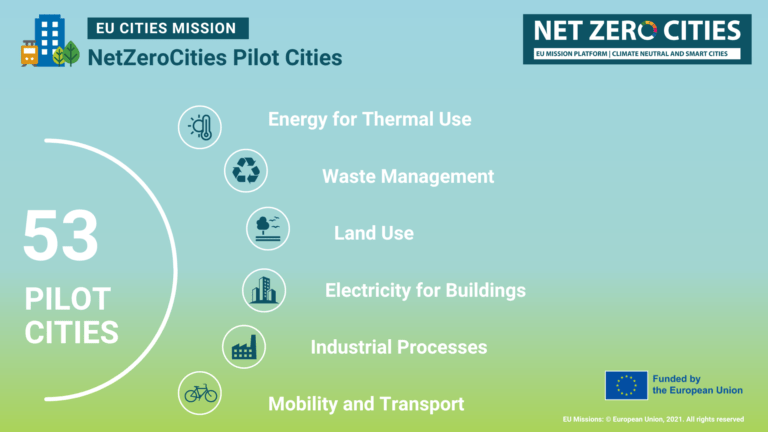
The Net Zero Cities website is now launched. Here you can find more information about the EU initiative for climate-neutral cities, which Viable Cities is part of. Among other things, we will contribute to the development of a European Climate City Contract, Climate City Contract. You can find the website here: netzerocities.eu
Guest writer Martin Wetterstedt, climate target researcher at Uppsala University, writes on our blog about the experiences from the work with the Climate Roadmap Uppsala. This is about how they developed proposals for working methods to reduce emissions from food and construction.