Boden is undergoing a crucial period of transition, with climate change as a key driver for development and future sustainability. Boden has unique conditions for driving this transition. With investments in renewable energy, circular flows, the development of world-leading green industry, and a strong tradition of local collaboration between the municipality, business, civil society academia, we are ready and well equipped to step up our work on climate change.
Boden's vision is The Good Life – a community where people live close to what is important and meaningful. Here, we take care of each other, protect our diverse living environment, and create opportunities through resource-smart and circular solutions.
The municipal council decides on the strategic plan, which is the municipality's most important steering document. It sets out the priorities for all municipal activities and the municipal group in the form of its companies. The strategic plan describes the areas of development, local environmental goals, and long-term directions that apply to the municipality during the current term of office. These aim to realize the vision and support the municipal organization in its development work.
We take special responsibility in our priority development areas – living environment, public spaces, business skills supply, and infrastructure – and the various committees' action plans translate goals and priorities into direct measures and initiatives.
The strategic plan and current annual action plans include clear priorities for improved and smart public transport, a clear focus on circularity and the circular economy in both direct initiatives and elements of the education system, various measures relating to energy efficiency, and the development of local food preparedness and food supply.
The governance model includes a cross-cutting perspective that must be taken into account in all areas of development. In Boden, we start from the cross-cutting perspective of Smart Human Green, which is about integrating the three aspects of sustainability—ecological, social, and economic—into all activities. The approach covers everything from developing system solutions with ecological and economic value chains to strengthening citizens' opportunities to make socially sustainable choices in their everyday lives.
At present, accelerating Boden's climate transition work primarily involves establishing an improved picture of the current situation. By collecting local statistics and breaking down national targets to the municipal level, a concrete basis for priorities and initiatives can be created. The planned work is based on a coordinated process in which digital tools and methodological support are used in the development of Boden's climate roadmap in close collaboration between administrations and companies.
In the city's latest update, they talk about the work, the transition arena, the project portfolio and much more.


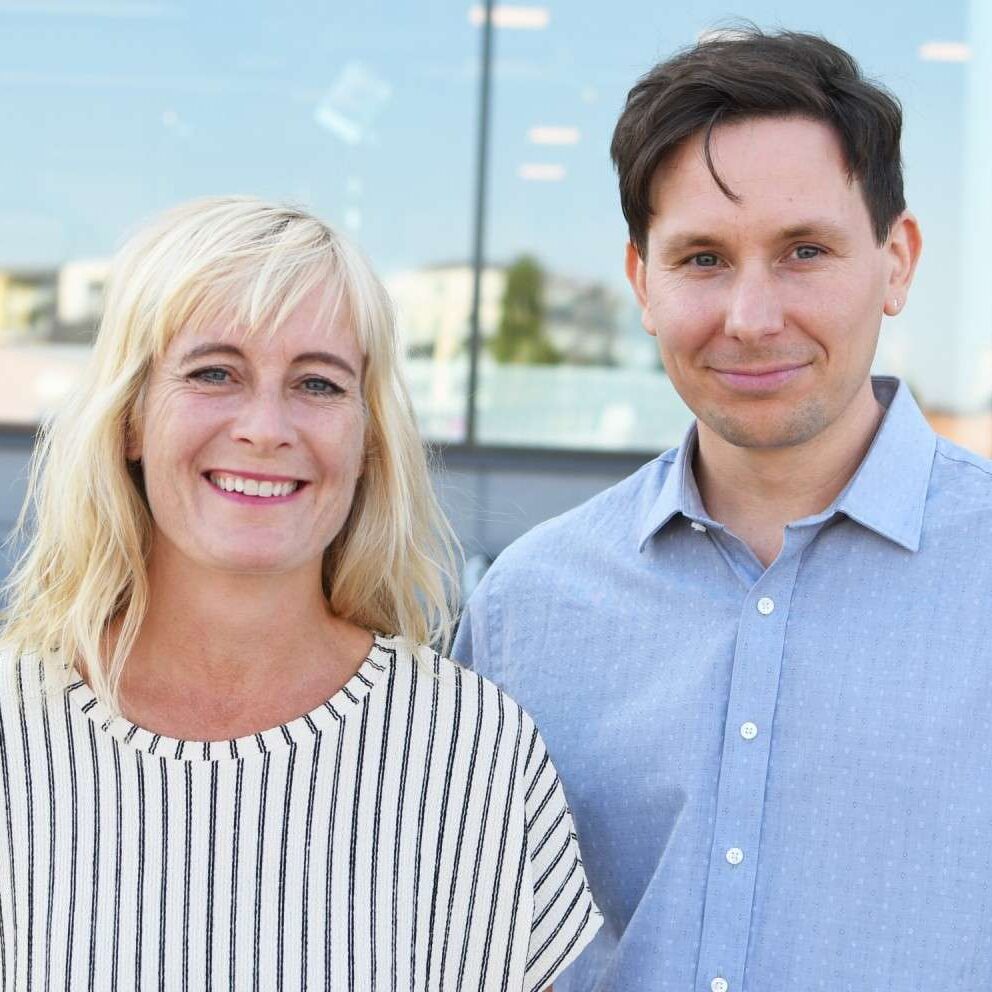
Patrik Lindahl, process manager for Climate Neutral Boden 2030, patrik.lindahl@boden.se
Elin Lindahl, process manager for Climate Neutral Boden 2030, elin.lindahl@boden.se
Sustainability Week – Boden's Sustainability Week is a platform for increasing engagement, building knowledge, and insights into sustainability and the society of the future. It also works to build and strengthen relationships between green industrial initiatives and local forces in Boden and the surrounding area. During the week, municipal operations, companies, business civil society get involved civil society activities and events that are all permeated by sustainability in both large and small ways!
Mobile recycling center – A mobile recycling center makes it easier to recycle correctly – wherever people are. During the fall, the municipality of Boden launched a new initiative involving a mobile recycling center, which stops at recycling stations around Boden according to a schedule. Here, hazardous waste, electrical waste, textile waste, and broken glass and porcelain can be disposed of. Increasing accessibility makes it easier to dispose of materials correctly, which saves resources and reduces environmental impact.
ÅterbruksBanken – ÅterbruksBanken is one of Boden Municipality's initiatives for circular economy and sustainable resource use. Here, equipment that is no longer used in one operation is collected, documented, and made available to other municipal operations – before new purchases are made. The aim is to reduce climate impact, save money, and at the same time create social benefits. The work is carried out by Förvaltningsservice, which also offers people the opportunity to grow and develop towards work or study. ÅterbruksBanken combines three dimensions of sustainability: economic, environmental, and social – a simple way to contribute to a more resource-efficient and inclusive municipality.
Bodenxt – Boden's collaboration platform for the green transition – a platform that brings together projects, initiatives, and collaborations to create a sustainable and future-proof society. The municipality works in collaboration with other actors in the following identified main areas:
The SLT bus in Gunnarsbyn – RÅEK , the service point in Råne Älvdal, is innovating with a new smart local transport solution that makes travel both easier and more sustainable. A major new development is the newly purchased minibus, which is primarily used for school transport – it takes students from the Niemisel area to Älvskolan in a safe and efficient manner. But the bus does more than that: when it is not transporting children, it is used to support the local community, for example by delivering food bags to the elderly, arranging transport to the vaccination clinic in Gunnarsbyn, or helping out at events at the village hall and in Boden. Transport is provided at cost price for members and is driven by members, which creates both community spirit and resource efficiency. This solution reduces empty runs, makes smart use of vehicles, and makes it possible to combine school transport with community services—a step toward a more sustainable and inclusive transport system.
Climate City Contract 2030 is a collective effort to achieve the climate transition that we need to implement in a short time to keep global warming below 1.5 degrees. It is an agreement between municipalities, government agencies and Viable Cities where all parties undertake to make a concrete contribution to increasing the pace of climate change.
To achieve deep change, we need to move from fragmented projects to an ecosystem of efforts that all pull in the same direction. Cities are doing this together with Viable Cities, funders government agencies and other partners, in different constellations and with different objectives. It is about moving beyond dealing with symptoms and instead focusing on underlying problems in our social structure. Here you will find the initiatives and studies within the city that have been granted funding under Viable Cities.

In Boden, there is a local habit of working on a broad front. Boden is one of 48 municipalities in Sweden that are joining forces to tackle the climate crisis and are joining forces in the next phase for climate-neutral and sustainable cities. This is also a...
Gävle is part of the NetZeroCities 112 Mission Cities, selected since 2022 to pioneer the EU Cities Mission.
Copyright © 2024 Viable Cities | Website policy | Accessibility