

In connection with its decision on the 2025 budget, the municipal council has adopted a strategic goal for the municipality to reduce its climate footprint and promote green transition. The goal states that the municipality should be a progressive force in the green transition and that it is important to contribute to a fair transition. As a municipal organization, we want to be a good role model and make wise choices for green transition. It should be easy for residents, businesses, associations, and visitors to the municipality to make environmentally and climate-smart choices.
Kristinehamn Municipality participates as a twin municipality in Viable Cities with the aim of developing a coherent strategy for the municipality's climate work and reducing its climate impact. We see great value in being part of the Climate Neutral Cities 2030 initiative, which gives us the opportunity to exchange experiences with municipalities that are further ahead in their climate transition work. Our first step is to work on establishing the current situation. With that as a starting point, we can then investigate which areas and initiatives the municipality's work should focus on going forward.
The municipal council has adopted four commitments for the municipality's work within the project. The work will focus on developing the municipality's governance and management for climate change; strengthening our capacity to analyze, calculate, and follow up on the municipality's climate impact; developing work with financing and investment for reduced climate impact; and developing the municipality's communication for climate change.
In the city's latest update, they talk about the work, the transition arena, the project portfolio and much more.


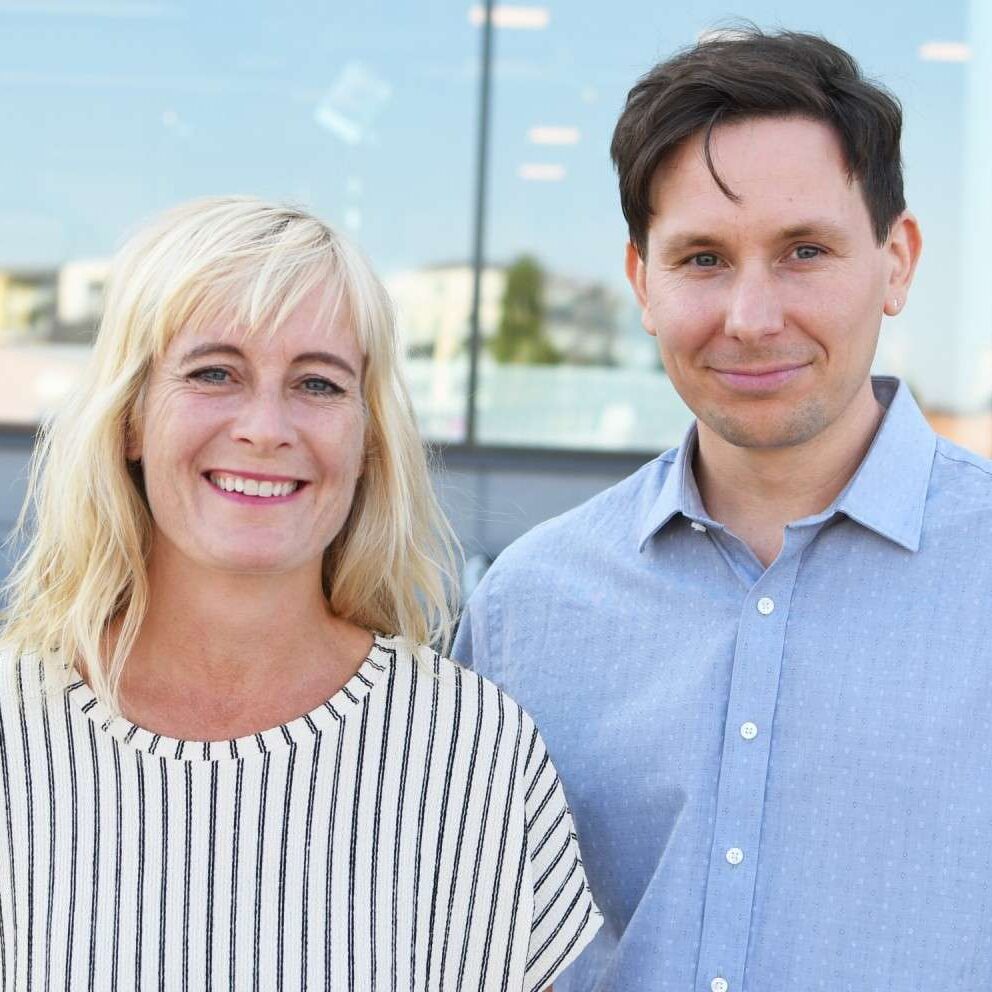
Lisa Berg, process manager for Climate Neutral Kristinehamn 2030, lisa.berg@kristinehamn.se
Petter Wikström, process manager for Climate Neutral Kristinehamn 2030, petter.wikstrom@kristinehamn.se
Wind power. Kristinehamn Municipality was an early adopter of a thematic addition to the comprehensive plan for wind power (2008). The wind power plan identified many relatively large areas, as the municipality had favorable conditions in terms of favorable wind conditions, few nearby residents, few other conflicting interests, and a positive attitude toward wind power and renewable energy. By designating areas for wind power, the municipality was able to apply the plan strictly in relation to the designated areas when there was interest in establishing wind farms, which has led to effective market control in some of the designated areas.
In developing the 2021 comprehensive plan, the municipality has once again taken a position on wind power planning within the municipality. Parts of the wind power plan have been incorporated into the comprehensive plan, and the municipality has thus chosen to secure the approved areas, which have also satisfied designated areas of national interest.
The development of wind power in the municipality has proceeded according to plan. There have been no major protests, and the municipality has not had to use its municipal veto. As a result, Kristinehamn Municipality is a net producer of electricity.
Flooding. During the winter of 2000–2001, Kristinehamn Municipality was hit by flooding as a result of high water levels in Lake Vänern. In August 2014, the municipality was hit by flooding as a result of heavy rainfall. In light of the flood risks associated with high water levels in Lake Vänern and heavy rainfall, as well as climate change with rising average annual temperatures, increasing average annual precipitation, and more frequent and intense rainfall, the municipality has developed a solid knowledge and planning basis in a flood analysis. It describes the probability and consequences of a number of simulated flood scenarios. Some of the knowledge gained from this work has been incorporated into guidelines for planning and construction with regard to flood risks in the municipality's comprehensive plan. The flood analysis and the continued knowledge building with updated analyses will be integrated into the municipality's work on risk and vulnerability, preparedness, and continuity planning.
Through analysis and experience of flooding, the municipality has good local knowledge of the risks associated with flooding and is therefore well placed to work in a structured manner to minimize the risks of and during flooding and to maintain a high level of preparedness.
Climate City Contract 2030 is an effort to manage the climate transition that we need to implement in a short time to keep global warming below 1.5 degrees. It is an agreement between municipalities, government agencies and Viable Cities, in which all parties undertake to make a concrete contribution to accelerating the climate transition. The letter of intent is a preparation for signing the contract next year.
To achieve deep change, we need to move from fragmented projects to an ecosystem of efforts that all pull in the same direction. Cities are doing this together with Viable Cities, funders government agencies and other partners, in different constellations and with different objectives. It is about moving beyond dealing with symptoms and instead focusing on underlying problems in our social structure. Here you will find the initiatives and studies within the city that have been granted funding under Viable Cities.

Kristinehamn balances region-wide issues and residents' choices. Kristinehamn is one of 48 municipalities in Sweden that are joining forces to tackle the climate crisis and are joining forces in the next phase of climate-neutral and sustainable cities. Kristinehamn is linking arms with Karlstad. This is at the same time...

Gävle is part of the NetZeroCities 112 Mission Cities, selected since 2022 to pioneer the EU Cities Mission.
Copyright © 2024 Viable Cities | Website policy | Accessibility
