Östersund’s ambitious goals are not “just” about the climate and reducing emissions, but also about health, equity, and quality of life.
In 2025, Östersund Municipality took major steps toward its goal of becoming a fossil fuel-free municipal organization. All passenger cars except one, which will be replaced in 2026, now run on fossil-free fuel. Heavy vehicles and work machines also run on HVO, biogas, or electricity. We have replaced the last oil boilers in our properties and we are reducing the climate impact of our air travel. We do this by purchasing SAF, Sustainable Aviation Fuel – an alternative to fossil aviation fuel.
The Fossil-Free 2025 initiative lays the foundation for our longer-term climate goals, which have been adopted by the City Council in the 2040 Master Plan and our Climate and Energy Strategy: a climate-neutral municipal group by 2030, a fossil fuel-free municipality by 2030, consumption-based emissions halved by 2030, and a climate-positive municipality by 2040.
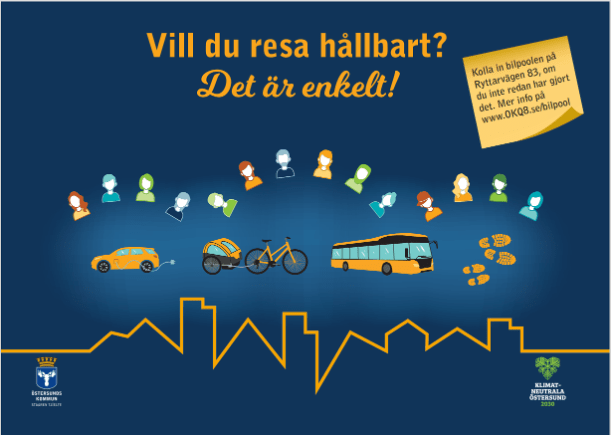
The circular transition continues, and during the year we developed the Interior Design Department, the Material Bank, and Varvet – the municipality's reuse warehouse for building materials. We are continuing our work on energy efficiency and sustainable transport. We also launched Klimatcoachen, a web service that helps private individuals reduce their climate impact.
Urban planning and construction
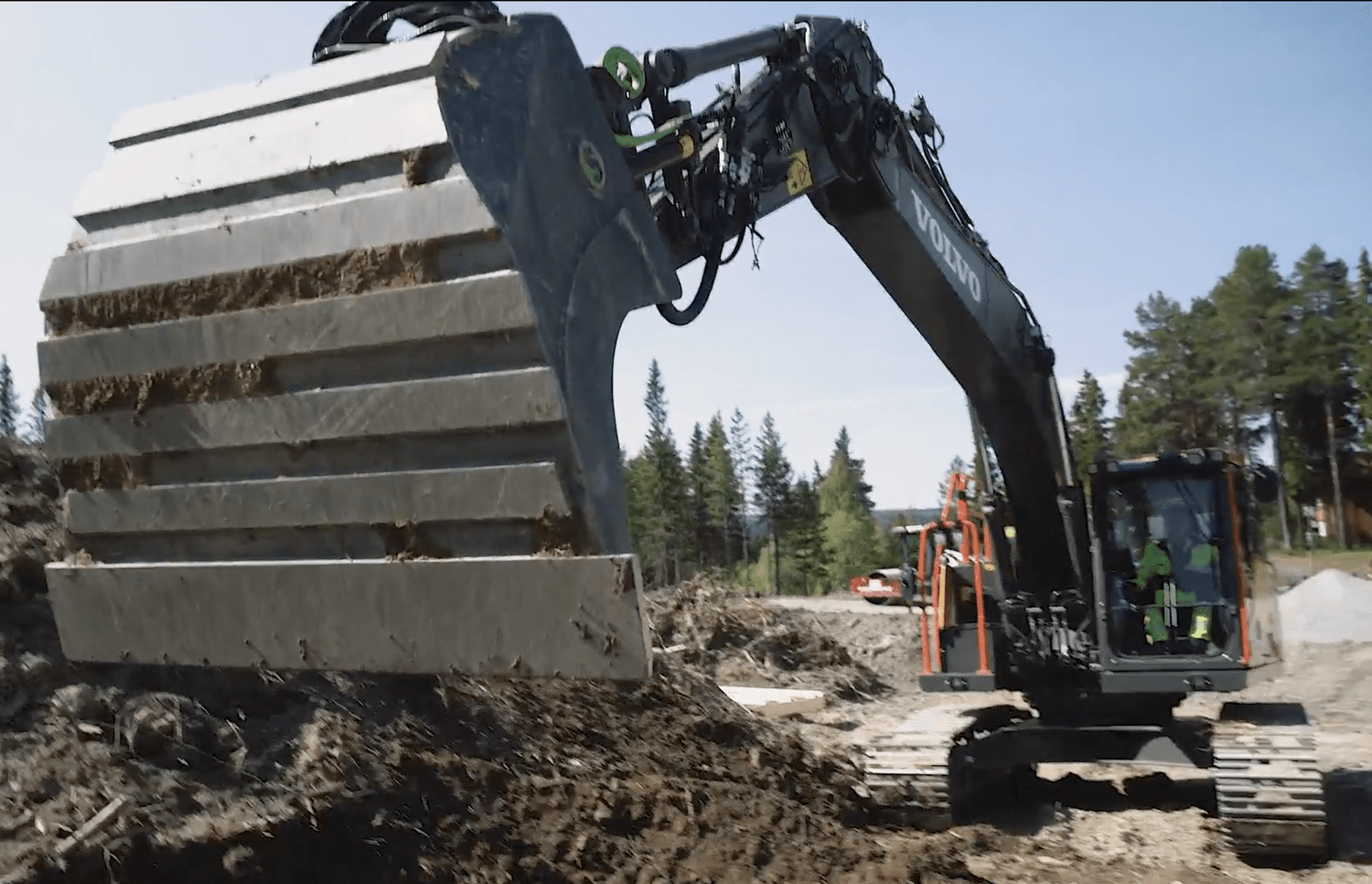
We are working to link planning and implementation more clearly when we build and develop the city. This means closer internal cooperation and more dialogue with external actors. The preliminary study for a sustainable construction model is complete and will form the basis for new guidelines from 2026. One of the highlights of the year was the opening of the Storfjället preschool, the EU's first emission-free construction site, which we carried out together with Skanska and Volvo. We are now using the same approach in more projects.
Arenas for transition
Within Arenas for Transition, we reach residents and businesses with various activities. We organize and develop recurring events such as the Climate Seminar, and test new concepts such as the Waste Charter, which has attracted considerable interest.
Tourism and events
We are also committed to reducing the climate footprint of events and using them as platforms for knowledge and behavioral change. Since 2025, four major events have received support in the form of tools, advice, and training to integrate sustainability into their planning work. In addition, we have collaborated with Storsjöyran on sustainable travel and launched a pilot project with Östersunds ice hockey club to promote sustainable travel to home games.
In the city's latest update, they talk about the work, the transition arena, the project portfolio and much more.


Caroline Hildahl, process manager for Climate Neutral Östersund 2030, caroline.hildahl@ostersund.se

Imagine a construction site that is almost silent, with no smell of exhaust fumes. A utopia? Well, no. Right now, a new preschool, Ottfjället, is being built in the municipality of Östersund, and they are doing it without fossil fuel emissions.
Internal interior design department. The interior design department in Östersund Municipality was established in 2024 with the aim of increasing the reuse of furniture and equipment from the municipality's various operations by receiving, renovating, and redistributing furniture, as well as offering assistance with interior design. The department works actively to reduce waste and promote sustainability by offering furniture and furnishings that would otherwise have been discarded. In 2025, the department sold furniture with a purchase value equivalent to SEK 10.2 million and a saving of just over 250 tons of carbon dioxide equivalents.
Waste charter. In collaboration with Studieförbundet Vuxenskolan and Spilloteket training center, we organized a charter trip to the Gräfsåsen waste facility outside Östersund. The aim was to test a new approach and format for public education in order to spread knowledge and raise awareness about consumption and waste management. The trip was attended by representatives from politics, business, education, the media, and the general public. The trip attracted a great deal of interest, and we are continuing to develop the concept.
Reduced emissions from food in municipal preschools and schools. Through dialogue with suppliers, Östersund Municipality has developed electrified transport of food to schools and preschools. To optimize the use of new electric trucks, the supplier tested delivering goods at different times of the day. In addition to the climate benefits, a positive effect has been that more deliveries have become safer, as they take place after school hours when the children have gone home. Kitchen staff have also seen major advantages in not having to interrupt their work to receive deliveries. As a result, this working method has now been made permanent and extended to include more schools.
In 2024, Östersund Municipality began calculating the climate impact of lunch menus in schools and preschools and adapting them to reduce their climate footprint. The goal is to reduce emissions from food purchased for school meals to a maximum of 1.65 kg CO2e per kg of food by 2027, without increasing waste. At the beginning of 2024, the figure was 1.95, and by 2025, it had been reduced to 1.36 in preschools and 1.79 in elementary schools.
Route optimization. Through route optimization with GIS, the municipality has streamlined trash can emptying and collection at recycling stations, resulting in significant gains. Route optimization means that we have managed to reduce the working time for emptying trash cans by 22 percent, shortened the driving distance by 14 percent, and thus freed up two working days a week and reduced the vulnerability of the staff group in the event of absences. For recycling stations, dynamic route adaptation means better procurement, increased competition, savings of up to SEK 400,000 per year, and more efficient collection with sensors.
Östersund highlights additional actions that they believe may be of particular interest to other municipalities to spy and apply. Contact the process leader to spy and apply.
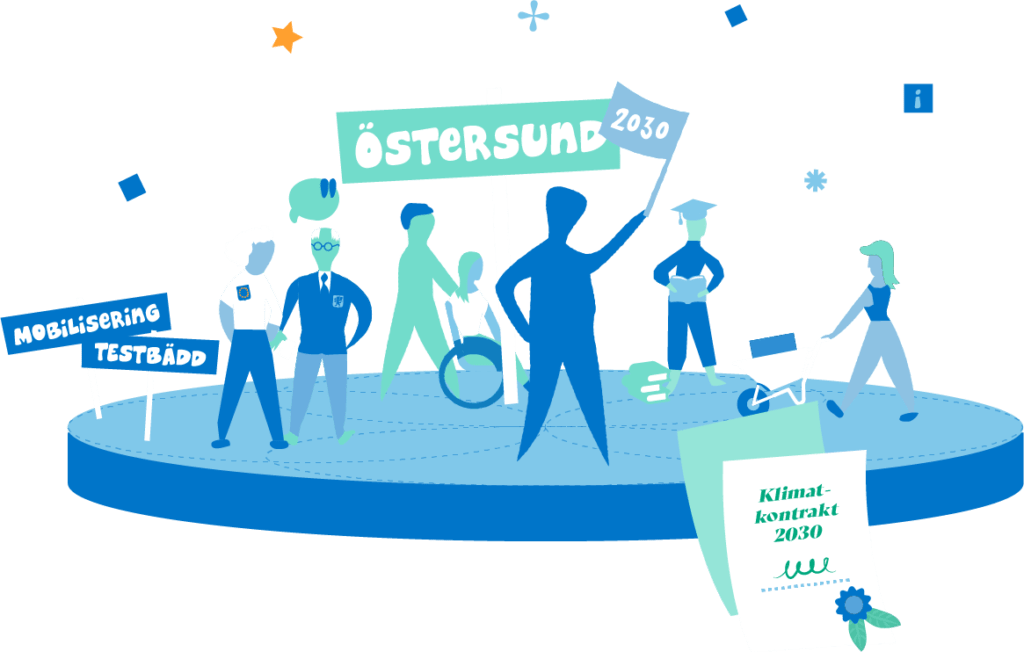
Climate City Contract 2030 is a collective effort to achieve the climate transition that we need to implement in a short time to keep global warming below 1.5 degrees. It is an agreement between municipalities, government agencies and Viable Cities where all parties undertake to make a concrete contribution to increasing the pace of climate change.
To achieve deep change, we need to move from fragmented projects to an ecosystem of efforts that all pull in the same direction. Cities are doing this together with Viable Cities, funders government agencies and other partners, in different constellations and with different objectives. It is about moving beyond dealing with symptoms and instead focusing on underlying problems in our social structure. Here you will find the initiatives and studies within the city that have been granted funding under Viable Cities.

440 climate heroes in the municipality of Östersund are spreading, sowing seeds and accelerating the transition with the help of the MEDmobility initiative - citizen...
Gävle is part of the NetZeroCities 112 Mission Cities, selected since 2022 to pioneer the EU Cities Mission.
Viable Cities is a strategic innovation program with the mission of achieving climate-neutral cities by 2030, ensuring a good quality of life for all within the planet’s limits. The program is funded by the Swedish Energy Agency, Vinnova and Formas and coordinated by KTH.
Copyright © 2024 Viable Cities | Website Policy | Accessibility