Climate neutral Karlstad 2030

Karlstad and Kristinehamn transition arena

Karlstad's climate goals state that the municipality's own operations must be fossil-free by 2026 and that the entire city of Karlstad must be climate neutral by 2030. In recent years, climate efforts have been significantly stepped up, largely thanks to participation in Viable Cities and the Climate Neutral Cities 2030 program.

We have more than halved our territorial emissions since 1990 (down 64%) and have been ranked among Sweden's top 15 municipalities in terms of environment and sustainability for the past twelve years. However, new emissions figures show increased emissions for Sweden as a whole, at a time when the consequences of the climate crisis have become all too real, making the situation serious.

The pace of climate change needs to increase further to avoid the worst consequences, while at the same time taking advantage of the opportunities for the economy, health, and security that climate change brings. We have therefore conducted an analysis and information campaign to ensure that key players are aware of the increased emissions and how this affects our climate change.

Much has happened since 2019, when the foundations were laid for Climate Neutral Karlstad 2030 – a pandemic, war in Europe, the AI explosion, economic fluctuations, polarization in society, and severe climate effects. Against this backdrop, Climate Neutral Karlstad 2030 has three new strategic directions for 2024-2027: fair transition, safe and resilient municipality, and intelligent city and countryside.

The new focus areas have been well received and have proven to fit very well with the municipality's priorities, even now, more than a year after they were formulated.

Deep dive into Karlstad's transition

In the city's latest update, they talk about the work, the transition arena, the project portfolio and much more.

You know, we usually say that we do these things to save the planet, but that's not quite right. It's really to save ourselves, because the planet will survive anyway. It's the well-being of humanity and our children and future generations that is at stake.
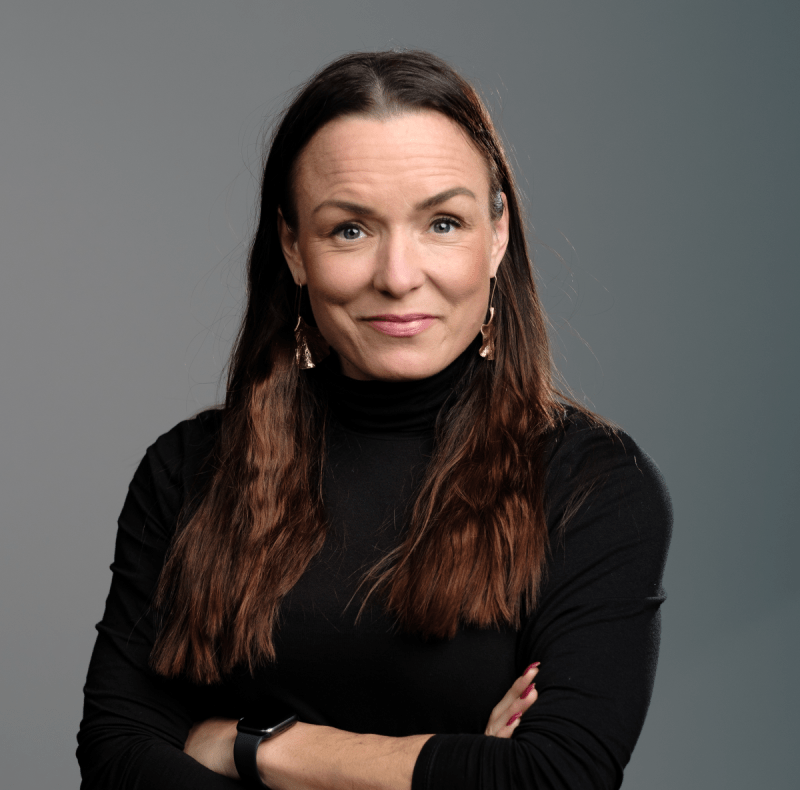
In the photo: Linda Larsson (S), municipal executive Chairman in Karlstad municipality.
Linda Larsson (S)
Municipal Executive Board Chairman in Karlstad municipality

Stare and steal

  • All calls
  • Karlstad
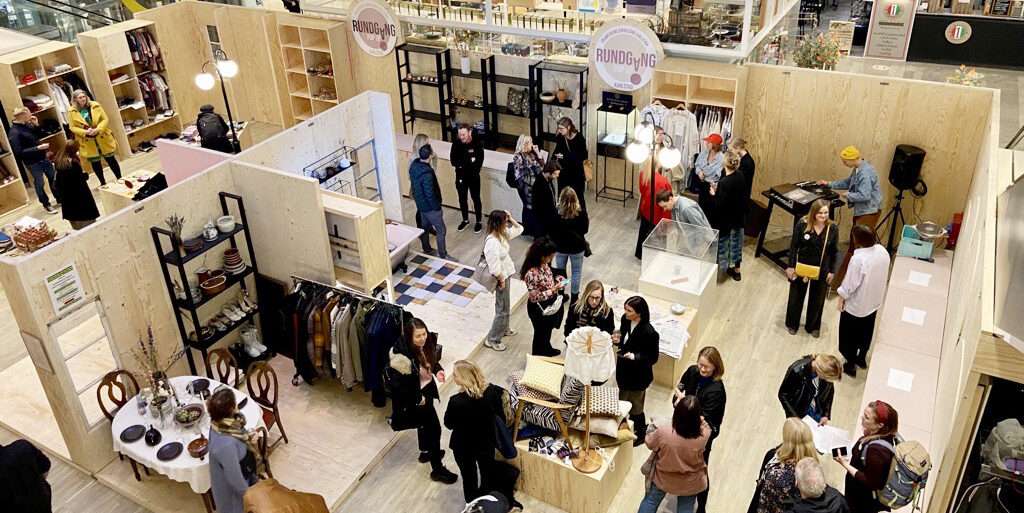
Circular mall Rundgång in Karlstad

Circular malls and reuse shops are places, physical or digital, that highlight different circular concepts such as second hand, vintage, remake, repair, rental services, refurbished technology and waste- and resource-smart products.

2025

Here are three initiatives from our work that we believe can inspire others:

CLIMATE + PREPAREDNESS = TRUE

One area where Karlstad has taken the lead is in linking climate change with crisis preparedness and resilience. Instead of viewing climate action and preparedness as two separate tracks, we have identified many synergies.

Our experience shows that measures to reduce emissions can often make a city better equipped to deal with crises. A clear example is the energy sector: by investing in local renewable energy, district heating, and energy storage, we become less vulnerable to price shocks and import bans on fossil fuels. During the pandemic, Karlstad weathered the energy price rollercoaster relatively well, precisely because we have almost completely phased out oil and have an extensive domestic energy supply.

There are also synergies in the food sector – investments in local food production and shorter food chains (e.g., support for REKO rings and local growers) reduce transport emissions and at the same time make us less vulnerable if global deliveries are cut off. We also see on a daily basis that sustainable transport means redundancy: if more people walk, cycle, or use public transport, our ability to cope with fuel shortages or blocked roads in a crisis increases.

Furthermore, we see that the circular economy strengthens preparedness and security in two ways in particular. Firstly, it builds circular supply security: when we reuse, repair, and share, we reduce our dependence on long and vulnerable supply chains. The experiences from the pandemic, when the availability of electronics was affected by broken chains, show how circular processes can mitigate shortages and price volatility. Secondly, the circular economy strengthens social capital: sharing models, neighborhood networks, and forms of collaboration around repair and reuse create trust, networks, and working methods that function in everyday life and can be scaled up in a crisis.

In Karlstad, we have begun to integrate these insights into our planning. We are going through the municipality's contingency plan point by point to identify where climate measures can be strengthened – and vice versa. In addition, we have developed communication materials in collaboration with the Swedish Civil Contingencies Agency (MSB) on how a climate-smart life also makes you better prepared. By planning climate change with safety glasses on and vice versa, you can achieve double the effect for each measure and more easily gain support for climate investments, as they are also about protecting residents and welfare.

Our experience is that climate and emergency preparedness teams should collaborate more closely—Karlstad, for example, has a long-standing partnership with the Center for Societal Risks at Karlstad University to build bridges between these areas.

AI FOR THE CLIMATE

An exciting new initiative for us is the development of AI-based tools that help municipal employees make climate-smart decisions. With a relatively small budget (SEK 300,000), we are developing pilot versions of several AI assistants that can be integrated into everyday work.

An AI assistant helps our construction project managers quickly calculate the climate and cost effects of choosing reused building materials for renovations. Another helps assess the effects of climate measures in energy and climate plans. A third is already in use. "Plankompis" can analyze consultation documents and planning programs to optimize them from a climate perspective.

The point of these AI tools is that they relieve the burden on staff and make advanced climate data available for decision-making. Instead of time-consuming investigations, an administrator can get quick, evidence-based suggestions for climate-smart solutions right at their desk.

ECOSYSTEM FOR CIRCULARITY

Karlstad is relatively well known for its efforts in circular trade and consumption. During the previous project period, "Rundgång" was implemented, a circular pop-up gallery that was so successful that it became permanent under private management and has been the destination for countless study visits. Our goal is to strengthen the entire ecosystem around circularity. We started by providing guidance to residents via Smarta Kartan, then worked with living labs and other innovation-supporting initiatives to develop more circular solutions, particularly in the sharing economy. We then started the second-hand network and Instagram account Cirkulära Karlstad (soon to have 4,000 followers), and then Rundgång, which lowers the barriers for both actors and residents to participate in the circular economy.

We also initiated a building reuse program that has been very successful and now serves as a depot for the municipality's supply of equipment, in combination with the municipality's internal reuse system with built-in AI support.

The next step will be to develop the secondhand network to the next level – something we look forward to telling you more about soon!

2024

Karlstad highlights three initiatives that they believe could be of particular interest to other municipalities to spy and apply. Contact the process leader to spy and apply.

  • The communication strategy for Karlstad's climate transition. The strategy itself provides a guide to harmonized and effective communication work and creates confidence, especially for all communicators in the municipality. In addition, it contains several important elements, such as a broad climate training, campaign month, message platform, etc.
  • System boundaries for climate targets. Karlstad has done a solid job of operationalizing and delineating what our climate neutrality goal includes. Even if other municipalities come to different conclusions, Karlstad's work creates a map of what choices need to be made and what they mean.

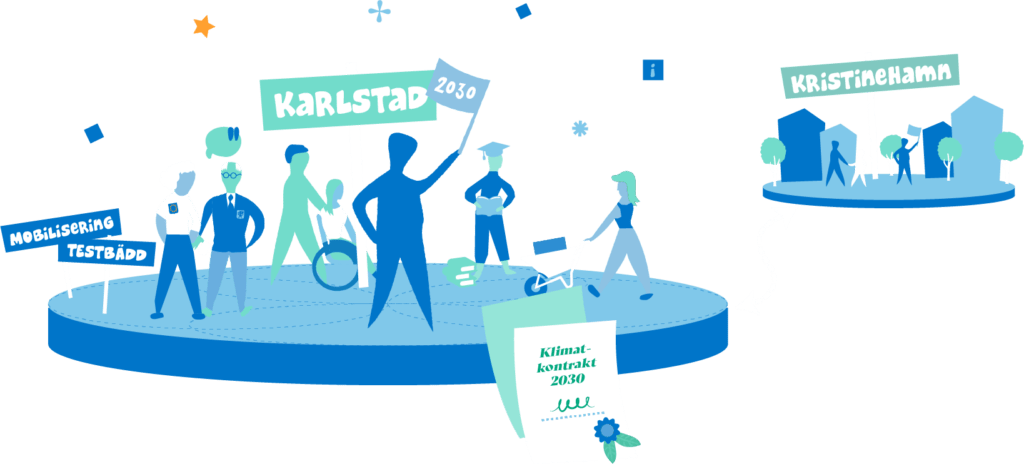
Karlstad Climate City Contract 2030

Climate City Contract 2030 is a collective effort to achieve the climate transition that we need to implement in a short time to keep global warming below 1.5 degrees. It is an agreement between municipalities, government agencies and Viable Cities where all parties undertake to make a concrete contribution to increasing the pace of climate change.

Karlstad invests and tests

To achieve deep change, we need to move from fragmented projects to an ecosystem of efforts that all pull in the same direction. Cities are doing this together with Viable Cities, funders government agencies and other partners, in different constellations and with different objectives. It is about moving beyond dealing with symptoms and instead focusing on underlying problems in our social structure. Here you will find the initiatives and studies within the city that have been granted funding under Viable Cities.

[It does not appear that the city has any ongoing initiatives at this time.]

  • All calls
  • #Debate
  • #EU
  • #FossilFreeSweden
  • #Helsingborg
  • #HorizonEurope
  • #Indiktarors
  • #InfraSweden
  • #innovation
  • #RethinkCitiesSummit
  • #Shiftsweden
  • Accelerate
  • Current Sustainability
  • Alvesta
  • Arvika
  • reuse
  • Avesta
  • hospitality industry
  • Floor
  • Borås
  • Borlänge
  • The Swedish National Board of Housing, Building and Planning
  • C40
  • Capabilities
  • Chalmers
  • CHAMP
  • Cities Mission
  • CitiES2030
  • Climate Smart Cities Challenge
  • Climate Week New York
  • Climate-KIC
  • CoAction
  • Cop30
  • Covenant of Mayors
  • debate
  • Digitalization
  • Drive Sweden
  • Driving Urban Transition
  • OTC
  • energy
  • energy communities
  • Energy Authority
  • Enköping
  • ERA-NET Cofund Urban Transformation Capacities
  • Eskilstuna
  • EU
  • Europe
  • European Viable Cities Day
  • Expo Dubai 2021
  • Falkenberg
  • Falköping
  • Formas
  • Research
  • Fossil-free Sweden
  • Gävle
  • Global
  • Gothenburg
  • Gotland
  • Greentopia
  • GTI
  • Håbo
  • Halmstad
  • Härryda
  • Helsingborg
  • Höganäs
  • Halmstad University
  • Höör
  • InfraSverige
  • InfraSweden
  • innovation
  • IVL Swedish Environmental Institute
  • Järfälla
  • Jobs
  • squid
  • Karlskrona
  • Karlstad
  • Karlstad University
  • Climate
  • climate adaptation
  • Climate breakfast
  • Climate investment and financing
  • Climate Investment Plan
  • Climate Communities
  • Climate communication
  • Climate competitiveness
  • climate city contract
  • Climate City Contract 2030
  • Climate-neutral cities by 2030
  • climate change adaptation
  • Communication
  • Consumption-based emissions
  • Kristianstad
  • Kristinehamn
  • KTH
  • Royal Institute of Technology
  • progress report
  • Landskrona
  • Linköping
  • Linköping University
  • Foodstuffs
  • Local Climate City Contract
  • Lomma
  • Luleå
  • Lund
  • Lund University
  • M100
  • Malmö
  • Mariestad
  • land use
  • Civic engagement and involvement
  • Mjölby
  • mobility
  • Mobility and accessibility
  • Mörbylånga
  • government agencies
  • Nacka
  • business
  • National nodes
  • The Nature Conservation Society
  • Environmental Protection Agency
  • NetZeroCities
  • NetZeroCitiesEU
  • New European Bauhaus
  • Nordic Transition Partnership
  • transition arena
  • transition team
  • Örebro
  • Örnsköldsvik
  • Östersund
  • PED
  • policy development
  • Positive Energy Districts
  • fairness
  • Research institute of Sweden
  • Resilience
  • RISE
  • collaboration
  • Sandviken
  • Sharing Cities Sweden
  • shift sweden
  • Skellefteå
  • SMHI
  • Södertörn University
  • Urban planning and construction
  • State Agricultural University (SLU)
  • Stockholm
  • Stockholm Environment Institute
  • PROUD
  • Storytelling
  • Strängnäs
  • Governance and management
  • Sundsvall
  • Swedish Municipalities and Regions
  • Swedish University of Agriculture (SLU)
  • Sweden-US Green Transition Initiative
  • System demonstrators
  • Swedish Agency for Economic and Regional Growth
  • Tomelilla
  • Transport Authority
  • Transition Lab Forum
  • Transportation
  • Trollhättan
  • twin cities
  • Ukraine
  • Ulricehamn
  • Umeå
  • Umeå University
  • UN-Habitat
  • UniCities
  • Upplands-Bro
  • Uppsala
  • Uppsala University
  • Call for proposals
  • Calls for proposals
  • Emission-free construction machinery
  • Valencia
  • the 2026 election
  • Värmdö
  • Växjö
  • Viable Cities Insight
  • Vinnova
  • WWF
Sharing towns

The initiative, which is part of the Sharing Cities Sweden program, aims to reduce energy use and climate impact by developing the sharing economy in...

Luleå works internationally

Gävle is part of the NetZeroCities 112 Mission Cities, selected since 2022 to pioneer the EU Cities Mission.