Enköping's model for climate transition is based on a combination of broad internal commitment, expert support, and a clear structure for learning and governance.
At the center are the five transition teams, consisting of managers and relevant employees from the municipality's various operations. They are responsible for identifying, analyzing, and proposing climate measures within their areas. They are supported by a special team of experts (both internal and external) with in-depth expertise who review and quality-assure the proposals – a working model that ensures both support and precision in the decisions.
The work is carried out in close dialogue with external actors, with partners and external experts contributing their knowledge and perspectives. Enköping also actively collaborates with the municipalities around Lake Mälaren and within the Climate Neutral Cities 2030 initiative, which strengthens shared learning and the pace of the transition.
The process is iterative and knowledge-based: teams collect and analyze data, test different alternatives, perform target balancing and tempo analyses, prioritize the most effective measures, and then anchor the results in governance and budgeting.
A fundamental principle of the work is ownership in the line. The managers and employees who plan, budget, and implement the measures participate in the entire process, which increases understanding, accountability, and the ability to put the strategy into practice.
At the same time, expert support is a crucial part of success. Continuous quality assurance and joint discussions between the business and experts create both legitimacy and greater accuracy in the measures taken.
By working with what the municipality calls dual control—both direct measures that reduce emissions here and now, and indirect efforts that build structures, culture, and working methods—Enköping is strengthening its overall ability to transition in a sustainable and long-term way.
Deep dive into Enköping's transition
In the city's latest update, they talk about the work, the transition arena, the project portfolio and much more.
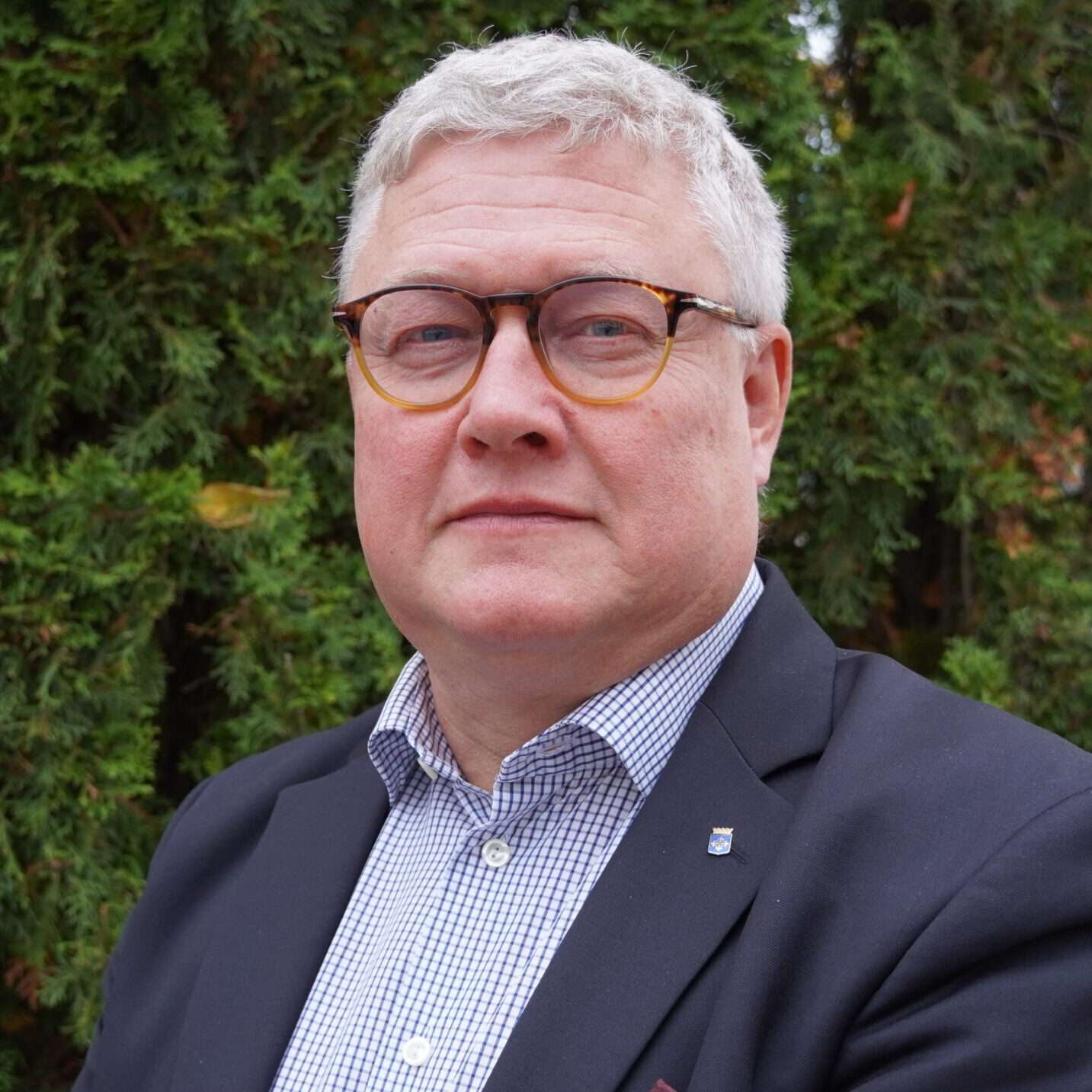
In Enköping, we have embarked on an ambitious project to identify and prioritize the climate measures that will have the greatest impact. Through knowledge-driven initiatives and a willingness to test new solutions in practice, we are tackling the challenges that lie ahead. We know that the transition timeframe is short, and this places high demands on us as leaders, both to be innovative and to work inclusively.
Peter Book (M)
Municipal Executive Board Chairman in Enköping municipality
peak and steal
2025
Enköping's climate transition is based on a process design that combines structure, participation, and learning. At the center is the transition arena, where five cross-functional teams of managers and employees drive the work forward with the support of a team of experts who ensure quality and buy-in. The work is supported by a methodology package that makes the process knowledge-based and systematic. Using ClimateView data, resource analyses, target balancing, and pace analyses, the municipality can identify which measures provide the greatest climate benefits and at what pace they can be implemented.
Portfolio management keeps the work alive. Measures and investments are continuously updated and woven into the municipality's regular planning cycles, which creates both flexibility and faster response to changes.
The most important lessons learned so far concern the importance of ownership in the line, continuous expert support, understanding of dual control—direct and indirect measures—and the need to balance investment and operation. The work is now entering its next phase—taking the best from the model and adapting it for implementation, follow-up, and financing. The goal is to maintain commitment and participation, while at the same time increasing the pace and linking climate work even more clearly to governance, budgeting, and investment.
2024
Enköping highlights three initiatives that they believe could be of particular interest to other municipalities to spy and apply. Contact the process leader to spy and apply.
Sustainable land allocation. Within the project, Enköping is developing a common standard for the land allocation process with clear and strategic requirements for sustainability. By integrating sustainability goals into the agreements, it is ensured that the developers' projects are in line with the municipality's long-term sustainability ambitions. The aim is for sustainability goals to permeate the entire planning process and be ensured from the construction phase to management and operation.
Feasibility study on a climate-neutral technical handbook. The aim of the feasibility study is to develop guidelines to ensure that construction processes and material choices support climate objectives and contribute to a more sustainable and climate-neutral urban development. Implementing new guidelines will ensure that every step of the construction process, from material selection to energy use and waste management, is in line with climate objectives. The handbook will also serve as a tool to promote climate neutrality in all parts of the process.
The EnOFF project to reduce energy consumption in public buildings. The EnOFF model is a simplified procurement method for energy efficiency developed in cooperation with ENEFF, the Swedish Public Procurement Agency and SKR. The model combines a holistic approach to energy efficiency with profitability and a flexible, stepwise procurement. The project comprises three stages: mapping, implementation and follow-up, and focuses on the most energy-intensive buildings, where measures reduce energy use and maintenance needs.
Climate City Contract 2030 is a collective effort to achieve the climate transition that we need to implement in a short time to keep global warming below 1.5 degrees. It is an agreement between municipalities, government agencies and Viable Cities where all parties undertake to make a concrete contribution to increasing the pace of climate change.
To achieve deep change, we need to move from fragmented projects to an ecosystem of efforts that all pull in the same direction. Cities are doing this together with Viable Cities, funders government agencies and other partners, in different constellations and with different objectives. It is about moving beyond dealing with symptoms and instead focusing on underlying problems in our social structure. Here you will find the initiatives and studies within the city that have been granted funding under Viable Cities.
[It does not appear that the city has any ongoing initiatives at this time.]