Lomma Municipality consists of two typical suburban areas, Lomma and Bjärred, where most working people commute to Malmö and Lund. The economy is dominated by the service sector, and the climate impact from this sector is therefore limited. The largest territorial emissions come from traffic, with transit traffic on the E6 accounting for about half of the emissions. A high average income means that consumption-based emissions are three to four times higher than territorial emissions.
Lomma has a tradition of strategic climate work. The municipality has implemented two energy and climate plans for 2016–2020 and 2021–2025 with around 100 measures. In the fall of 2025, we will adopt a third energy and climate plan in the municipal council for the period 2026–2030. Energy supply for heating and electricity is approaching fossil-free status through a transition to bioenergy thanks to the work of the energy company Kraftringen. The municipality has also made significant progress with energy-saving measures in its property portfolio.
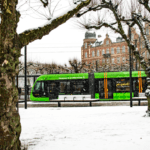
In 2020, passenger traffic resumed on the Lomma Line, making it possible to travel from Lomma to Malmö by train. The municipality is planning two additional stations on the Lomma Line, Flädie and Alnarp, with an opening date in December 2027. For several years now, the municipality has been participating in Region Skåne's concept of creating super cycle paths between urban areas. The goal is to increase bicycle commuting to and from work and school and to create better conditions for everyday exercise, which in the long run contributes to the well-being of residents. The Community Development Administration has also initiated a study to investigate how to promote accessibility for fast cyclists.
During the 2000s, the municipality has deliberately densified the central parts of residential areas and created traditional squares as attractive hubs for commerce, services, and restaurants. This has increased attractiveness and reduced the need for mobility.
In the city's latest update, they talk about the work, the transition arena, the project portfolio and much more.


Ulrika Håkansson Ström, process manager for Climate Neutral Lomma 2030, ulrika.strom@lomma.se
Per Blomberg, process manager for Climate Neutral Lomma 2030, per.blomberg@lomma.se
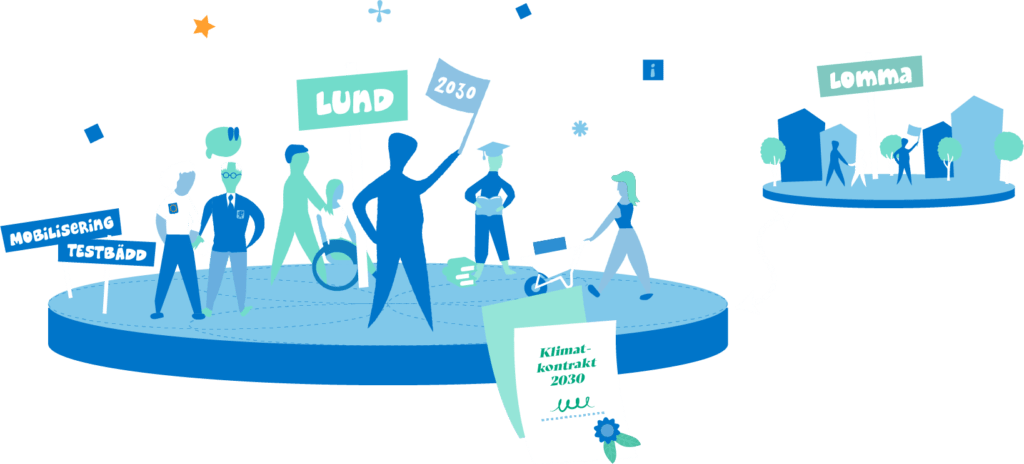
Climate City Contract 2030 is an effort to manage the climate transition that we need to implement in a short time to keep global warming below 1.5 degrees. It is an agreement between municipalities, government agencies and Viable Cities, in which all parties undertake to make a concrete contribution to accelerating the climate transition. The letter of intent is a preparation for signing the contract next year.
To achieve deep change, we need to move from fragmented projects to an ecosystem of efforts that all pull in the same direction. Cities are doing this together with Viable Cities, funders government agencies and other partners, in different constellations and with different objectives. It is about moving beyond dealing with symptoms and instead focusing on underlying problems in our social structure. Here you will find the initiatives and studies within the city that have been granted funding under Viable Cities.

Lomma has been working strategically for a long time and is now increasing the pace even further. Lomma is one of 48 Swedish municipalities joining forces to face the climate crisis and is joining forces in the next phase for climate-neutral and sustainable cities. Lomma is linking arms...

Gävle is part of the NetZeroCities 112 Mission Cities, selected since 2022 to pioneer the EU Cities Mission.
Copyright © 2024 Viable Cities | Website policy | Accessibility