Almedalen 2026 – A Boost for Climate Transition on a Broad Front
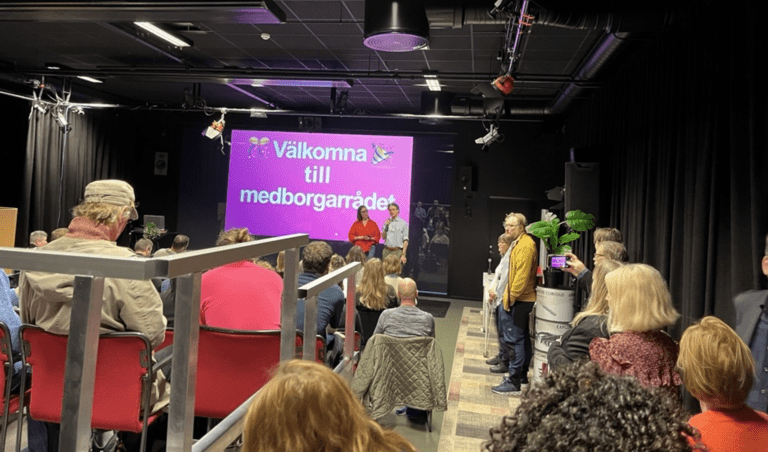
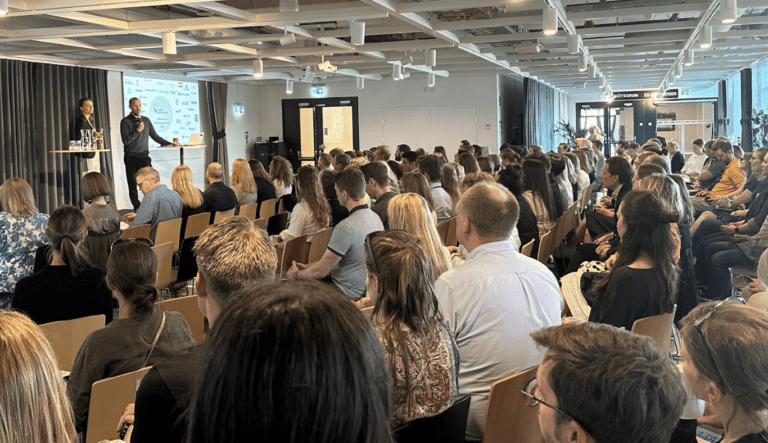
Almedals Week 2026 in Visby—Inspiration, an election year, a bustling crowd, morning swims, and renewed energy for action. That’s how we’d sum up Almedals Week 2026 in Visby.

Almedals Week 2026 in Visby—Inspiration, an election year, a bustling crowd, morning swims, and renewed energy for action. That’s how we’d sum up Almedals Week 2026 in Visby.

Most of the trips we take are short and routine. To work. To school. To the gym. When more people walk, bike, or take public transportation, everyone in society benefits: people, employers, society—and the planet. Green travel plans are an approach that makes it easier for more people to travel sustainably in their daily lives. Today, we’re launching a comprehensive resource on our website that makes it easy to get started.

In June, over 200 participants from all over the country gathered in Linköping for Transition Lab Forum 18. On our blog, Sandra Viktor, process manager Climate Neutral Linköping 2030, tells us about three days filled with energy, new knowledge and system movement under the theme of sustainable mobility.

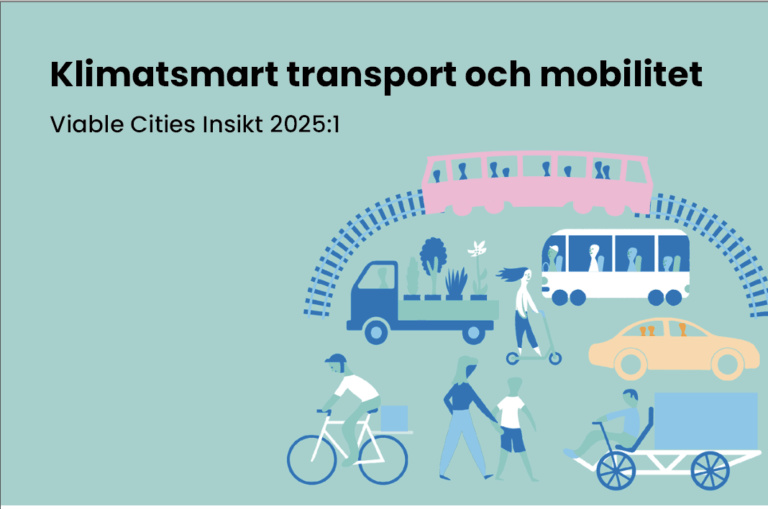
Today, we are publishing Viable Cities Insight 2025:1. Through them, we provide short analyses of actions taken under the programme, such as the Climate City Contract 2030 updated by 2030 cities every year. In the first insight, we take a closer look at how cities describe the local climate transition in terms of transport and mobility in Climate City Contract 2030 and in the 2030 cities' progress reports of the same year.

Climate Breakfast is a simple meeting place. You can drink your morning coffee, while we, together with some change leaders, offer in a very short time an insight into a topic that accelerates the climate transition in cities.

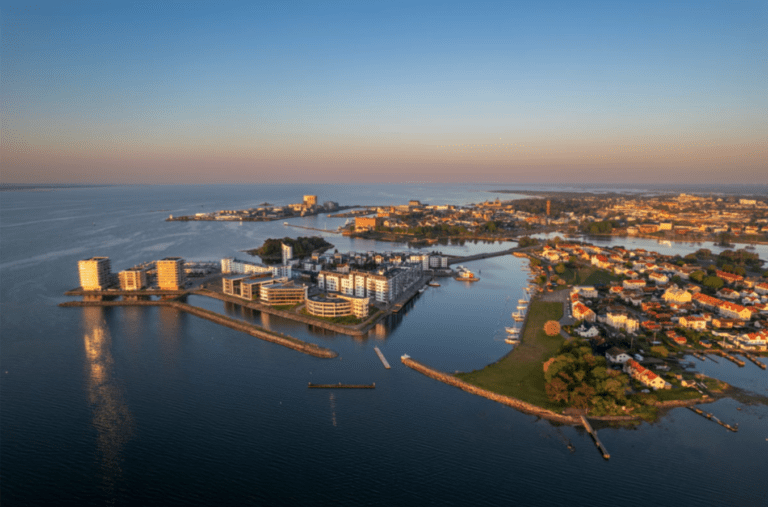
Kalmar municipality's long-term goal is to become one of Sweden's best municipalities in ecological sustainability, climate transition and climate adaptation! How do we achieve this? Well, among other things, 60% of all journeys will be made by bicycle, walking and public transport by 2035 and a new purchasing and procurement policy will be developed with stricter requirements for fossil-free transport, construction and contracting projects and circular economy. In addition, an increased share of electricity will be both locally produced and renewable with the goal of becoming self-sufficient by 2035. Kalmar municipality is sharing this and much more as part of the State of 2030 Cities.

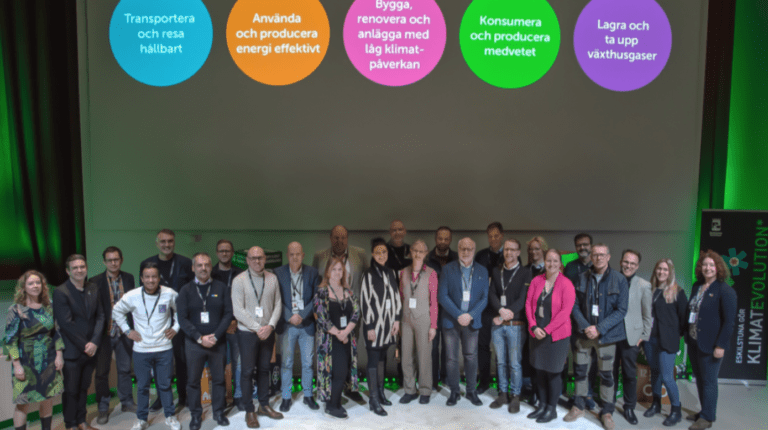
Eskilstuna is working on collaboration, recycling, logistics, citizen engagement and much more - they are doing Climate Revolution! Eskilstuna's goal is to be climate positive by 2045 and to reduce greenhouse gas emissions by 80% by 2030. This also includes consumption-based emissions, which is a major challenge, but very important because they account for such a large proportion of emissions. The work is done in collaboration both internally and together with external actors in the five focus areas of the climate program: Transport and travel sustainably, Use and produce energy efficiently, Build, renovate and construct with low climate impact, Consume and produce sustainably, Store and absorb greenhouse gases.

Lund Municipality is accelerating to increase the pace of the transition to achieve the goal of climate neutrality by 2030. The municipality needs to strengthen collaboration both internally and with external actors. In Lund's transition work, the focus is therefore currently on organization, financing, and continued mobilization of climate work, both internally and externally. The biggest sources of emissions that the municipality needs to work with going forward are transport and agriculture.
In preparation for the 2025 budget, Lund City Council has allocated an extra SEK 40 million for a strengthened climate package. This means that climate work will get a real boost during the year. Examples of initiatives to be implemented during the year are pilot projects for sustainable travel in schools, the establishment of a rebuilding depot for building materials, energy efficiency of street lighting and extra funds for the operation and planting of trees.

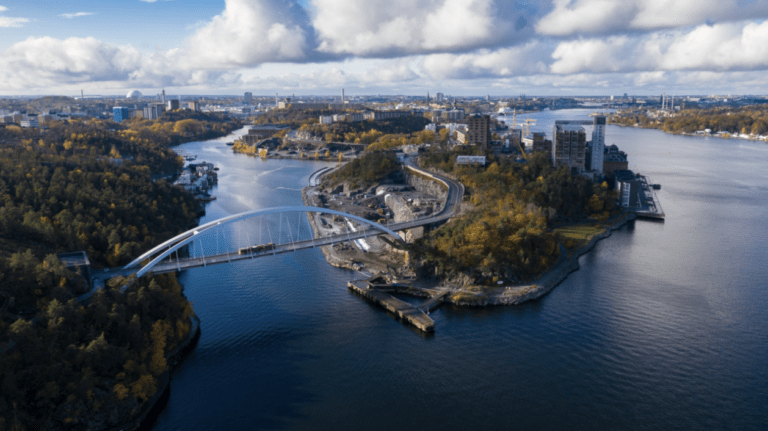
Stockholm was one of the first cities to receive the EU's Mission Label for its climate work, and with this in mind, the city continues to work for the transition by connecting, strengthening and further developing existing cooperation structures. Together with the city's stakeholders and citizens, they are investing in increased electrification and more efficient transport, electrified construction, carbon capture and storage, reduced plastic use and increased sorting, and not least an environmental zone in the city - which is also part of the system demonstrator STOLT.

In Gothenburg, there is a strong focus on developing the city's ability to create and utilize citizen engagement in the environmental and climate transition, and in the spring of 2024, the city conducted a so-called citizens' council, where 30 people were given the opportunity to contribute thoughts and suggestions on how the city can engage and involve residents in transforming society for the environment and climate. Gothenburg is also working with a broad toolbox to create a more sustainable and efficient mobility system that will benefit citizens, including efforts for walking and cycling, trams, electrified buses, micromobility and trains. Mobility is a major issue for the city, but it is also working on climate-neutral construction, circular economy, farming, green infrastructure and nature-based solutions, and much more.

In Järfälla, the expansion of Barkarbystaden is underway - one of Sweden's largest urban development projects. To reduce emissions from construction transport, a logistics solution has been procured, with the aim of coordinating and optimizing resources for the thousands of construction transports that need to get in and out. The municipality is also working on an internal reuse system, where furniture and equipment within the municipal organization are reused. Not only that, Järfälla has several initiatives in a portfolio for the transition, including a strategy for sustainable urban development, circular construction, sustainable transport and positive energy districts (PED). In Järfälla, they build, furnish and plan for the future!

New and ambitious climate and environmental goals are being developed in Nacka's new climate and environmental program. The municipality is working on initiatives in several areas, from mobility and urban planning to organization and procurement. Among other things, the municipality has invited to a land allocation competition focusing on innovative solutions for minimized climate impact throughout the life cycle, free lending at libraries of different types of meters for energy and climate advice, and offering a recycling market for private individuals. There are thus several initiatives underway in Nacka municipality for climate change adaptation, of varying scope and scale, and there is active follow-up to ensure that the right things are being done and done right.

By integrating sustainability issues into its core activities, Enköping Municipality is acting proactively in the climate transition, and the municipality is investing in creating a culture where sustainability permeates both the municipal organization and the city. With tools such as a carbon budget and in-depth climate knowledge, the municipality works, among other things, with the role and potential of small businesses, urban planning where sustainability goals are to be reflected, reduced energy consumption in public premises using the EnOff model and influencing attitudes, behaviors for sustainable travel, and much more.

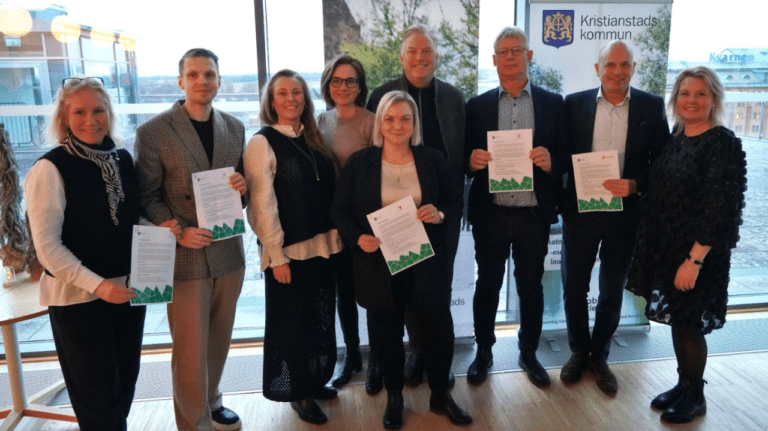
Kristianstad - a city in Skåne with a strong focus on the transition of the food system, energy, mobility, the construction industry and, not least, the rewetting of peatlands in the Kristianstads Vattenrike Biosphere Reserve. Kristianstad is working with local actors to achieve a climate-neutral, sustainable and resilient food system in Kristianstad, has recently adopted a sustainable development strategy that is followed up annually through a progress report, is mobilizing, together with local actors, for increased energy production, reliable electricity distribution and efficient energy use, and is developing its methodology for business-oriented climate investment plans.

In Uppsala, the focus in the coming years will be on improving energy and power efficiency and increasing the share of renewable electricity, setting high climate requirements in land allocation competitions and procurements, and investing in sustainable travel through tramways, traffic diversions, new cycle paths and charging infrastructure. The new football pitch at Fålhagens IP can also become a reservoir in the event of torrential rain, the municipality plants hundreds of new trees every year, and the municipality has produced documentation and reports on various risks that may arise due to climate change, as support for property owners and construction companies. The Uppsala Climate Protocol, which has existed since 2010, brings together companies, public sector organizations, universities and associations that want to make concrete progress towards a climate-adapted Uppsala.

Växjö municipality aims to be both fossil fuel free and climate neutral by 2030. Therefore, a special focus in the transition is on a sustainable transport system, but Växjö also works with energy-smart housing, engaging local companies, and recycling of building materials. And not least, they work with young people at upper secondary school level, who choose a challenge in the climate transition, develop proposals for initiatives that contribute to solving the challenge, and then exhibit their work at Linnaeus University.

Linköping tells us, among other things, about the climate investment plan for transport they developed together with Linköping University, how they developed a model for category management and worked on an environmental commuting analysis, that they allocated funds for test bed checks and launched a smart map where you can rent, share, exchange, borrow, repair and buy reused. Read also about the five priority areas Linköping is focusing on and the initiatives, networks and project groups that are bubbling with commitment!

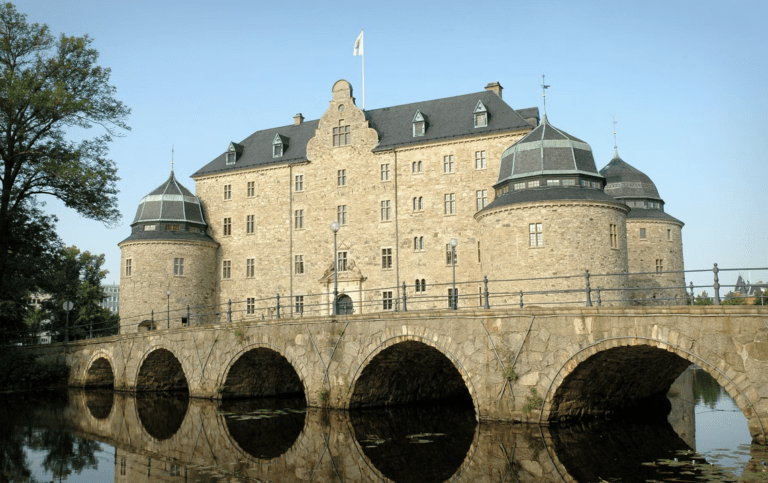
In Örebro, the municipal council recently adopted the Örebro municipal climate strategy after revision during the year. The targets in each of the six focus areas in the strategy are aimed at the municipal group, but the efforts relate to both the municipal group and the geographical area. The municipality has also set specific goals that they are working on together with other actors and the focus going forward is to implement the climate strategy's new working methods and implement prioritized activities.

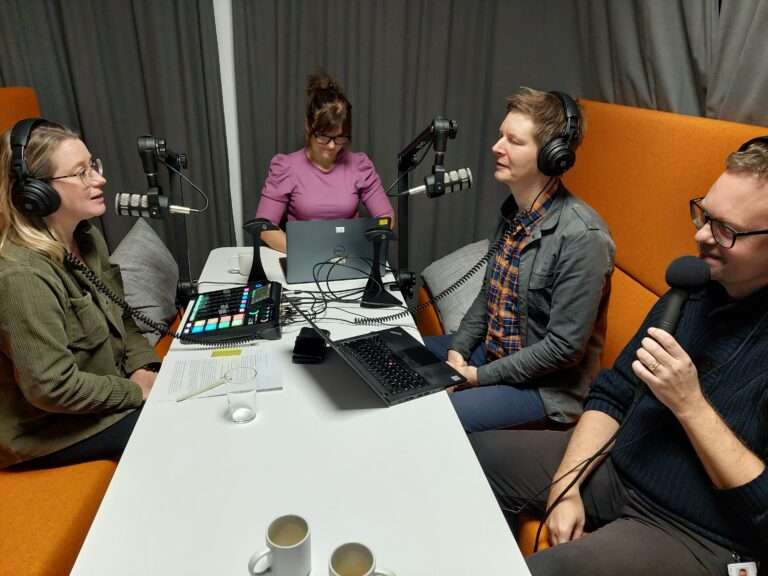
Karlstad is working on a broad front for the climate transition, from student councils and collaboration to climate investment plans and ambitious targets. Charlotte Wedberg and Henric Barkman, process managers for Climate Neutral Karlstad 2030, talk about the transition work in the city, which is both broad and ambitious.

Much of the emissions in cities come from the transportation of people and goods, making mobility a key issue in the transition to climate-neutral cities. Climate Breakfast 30 explored how the mobility of the future can be designed for the transition; what sustainable climate-neutral mobility and accessibility can look like in practice; what collective mobility and micromobility are and what role they play; and how Linköping and Järfälla work with mobility as part of their climate transition work.

In Borlänge, Skellefteå and Karlstad, new mobility solutions are being developed to improve accessibility between town and country throughout Sweden. The new projects promote behavioral changes that can contribute to climate-smart and sustainable transport and mobility patterns for people and goods between city and country, in urban and rural areas.
Smart City Expo World Congress (Barcelona, November 15-17) is the leading international event for the smart city sector, a key meeting point for experts and leaders of the world's most innovative cities, companies, research centers and international organizations. Over 24,000 professionals are expected from more than 700 cities and over 400 international speakers that will share their vision on how to build a more sustainable and livable urban future.
Do you want to contribute to the development of sustainable urban mobility? Now you can apply for support for Swedish participation in the call for proposals within the European-Chinese cooperation program ERA-Net Cofund Urban Accessibility and Connectivity Sino-European. The Swedish Energy Agency and Vinnova with Viable Cities and Drive Sweden together announce about SEK 9 million to Swedish actors.
Viable Cities and Drive Sweden are now launching a collaboration to join forces to accelerate the climate transition in cities, with a focus on climate-neutral mobility. "Now, together with our partners, we want to develop a process that accelerates the transition to climate-neutral and sustainable transport in cities," says Olga Kordas, Program Manager Viable Cities.
Climate Breakfast 4 was organized in collaboration with Drive Sweden and focused on different pieces of the puzzle that are necessary in the transition to a transport system that is sustainable, safe and accessible to all.
On June 12, a final seminar was held within the innovation project Mo-Bo, funded by Viable Cities. In connection with this seminar, the report "Mo-Bo | Mobility services pave the way for innovative architecture" and a short leaflet "Steering towards new goals Residential blocks with parking...
Car traffic in the city needs to be reduced - both to create a more attractive city, and to reduce the climate impact of traffic. With funding from Viable Cities, "car-free living" is being demonstrated in the Xplorion property at Södra Brunnshög in Lund by offering...
Do you want to help move from words to action and create a transport-efficient society that is equal, accessible and resource-efficient? There is a lot of knowledge today about what needs to happen to reach national and local energy and climate targets....
Smart Sustainable Cities is participating in the Smart Cities 2017 conference, November 22-23 at Kistamässan. Smart Cities consists of a two-day conference of the same name, organized in collaboration between EasyFaris and Geoforum Sweden, and a vibrant exhibition focusing on the smart city....