Status Completed

Sharing business models

The initiative is part of the Sharing Cities Sweden program. The understanding of the new business models is key to implementing "business model ecologies" in our cities. Therefore, analysis of business model ecologies is being carried out in several European cities. This effort makes it possible to estimate with high fidelity the performance of these new schemes, such as the car modeling business model.


Sharing communities

The initiative, part of the Sharing Cities Sweden program, aims to explore the social drivers and potential of the sharing economy in communities and cities in Sweden. It will focus on how housing companies can facilitate sharing between tenants and provide space for sharing.

Sharing platforms

The initiative is part of the Sharing Cities Sweden program. The purpose of this initiative is to investigate whether digital sharing platforms based on a more user-centered sharing philosophy can solve the problems of the previous platforms, which tended to be more resource-centered.

Sharing towns

The initiative, which is part of the Sharing Cities Sweden program, aims to reduce energy use and climate impact by developing the sharing economy in smaller cities. By using Karlstad and other smaller cities in dialog with Karlstad, the initiative will answer the question - what role can smaller cities and towns play in the sharing economy and how can their work be driven?

Urban bonds for climate-smart cities

Viable Cities Portfolio

The initiative will explore how social and climate impacts can be measured and calculated in sustainable bond solutions, thereby helping to mobilize capital. The market for sustainable investments is growing. The aim is to open up investments in new models and solutions that can accelerate the transition to low-carbon cities. Today, few bond solutions support a holistic approach to smart, sustainable cities. The initiative will create a framework for a sustainable city bond.

System innovation for climate change adaptation in cities - experiences and ways forward

Viable Cities Portfolio

This initiative has two objectives. It will provide a policy-relevant overview of experiences gained as a basis for systematic learning on how system innovation in sustainable urban development has been developed in practice. It will also help to further develop these experiences and lessons learned with a focus on a new model of governance for climate transition in cities and municipalities. Governance refers to when an authority, such as a municipality, needs to go beyond what it has control over to bring about change, in this case in the form of collaboration with business, civil society and academia on climate change.

Thriving North

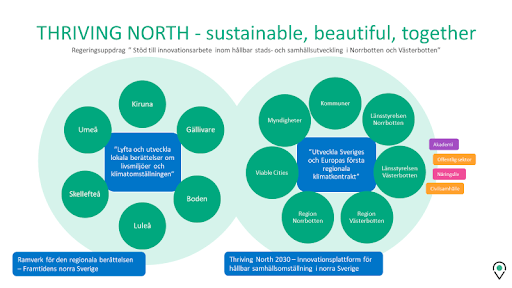
In 2022, Viable Cities has been responsible for a government assignment "Support for innovation work in sustainable urban and community development in Norrbotten and Västerbotten" with the working name Thriving North. The assignment identified six municipalities (Kiruna, Gällivare, Boden, Luleå, Skellefteå and Umeå) and actors in Västerbotten and Norrbotten (county administrative boards and regions). The government assignment was divided into four partial deliveries.

Urban DIGG Infra

This feasibility study aims to explore how the smart city can best support its citizens and connected things in terms of digital infrastructure. How are we connected to services and functions in 2030? What services and business models might exist? What are the needs and requirements for accessibility and security? How does the network become more robust against external and internal impacts?

Value creation with open data from the ectogrid™ energy system

The initiative will create conditions for various companies, associations, research and public activities to benefit from open data from the ectogrid™ energy system. By making ectogrid™ data available, digitalization and citizen involvement can contribute to increased energy system optimization, e.g. by balancing energy types and loads.

3De - energy challenges with three-dimensional real estate zoning

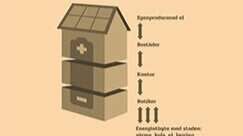
The initiative will shorten the links between research and practice in working with three-dimensional (3D) building layout to accommodate multiple owners and many functions in the same building. This creates both opportunities and challenges for energy optimization (e). The initiative focuses on bringing together researchers with specifiers and implementers in three urban development projects.