Label Governance (governance and management)

#05: Innovation leadership for sustainable and climate-neutral cities

Viable Cities Climate Breakfast

In 2019, Viable Cities and Vinnova made an inventory of 15 municipal projects regarding the need for support for innovation management, to work long-term and systematically with innovation. It showed that many are working actively on the issue but that more support is needed. In response to the need, a project is now starting to develop skills, methods, models and tools for innovation management so that cities can become climate neutral more quickly and efficiently.

Transition Lab Forum 4: Workshop 2 Climate City Contract 2030

During the afternoon of November 6, we further developed Climate City Contract 2030 as part of the ongoing process in the nine cities of the Climate Neutral Cities initiative. We explored how digital tools can help us to make better and more transparent decisions, and provide a shift in climate work. Using the City of Gothenburg as an example, we delved into how we organize development work in the city, focusing on the development of the climate contract, but also what is needed in the cities to be able to accelerate the transition to a climate-neutral city.

#01: 5 ways to involve citizens in the climate transition - for real

Viable Cities Climate Breakfast

For the climate transition to work, citizens need to be involved, not just on an occasional basis and on a specific issue, but always and for everything. How can this be achieved? During our first climate breakfast, Edward Andersson from Democratic Society will share five ways to involve citizens - for real. Charlotte Gustafsson-Brynielsson, Växjö municipality, tells us how they work with citizen engagement.

Managing collaboration

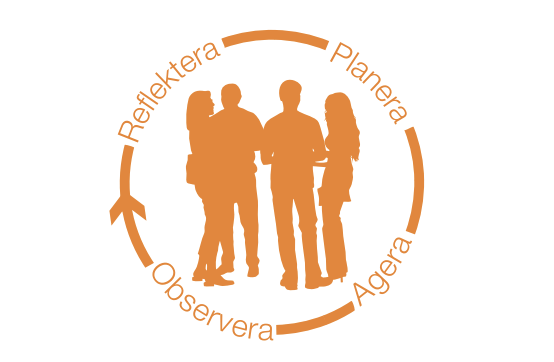
The handbook contains advice and instructions for those who lead or participate in cross-border change processes. It describes how an IBA process can be designed and adapted to local conditions, provides an introduction to how conflicts and power can be managed constructively in collaborative processes, and concludes with an insight into the scientific fields of knowledge on which IBA is based.